The VH Luxe destination guide

Tanzania Safari

Follow the season, not a fixed camp list.

Recommended stay

8–

10 nights

Best time

Late December through April typically favors Ndutu and the southern plains. May through October is broadly drier, but the correct Serengeti region still depends on the month and current movement.

Primary gateway

Kilimanjaro International Airport, then Arusha and the route-matched road or bush-flight plan

Journey context

Eight to ten nights across two Serengeti contexts and Ngorongoro, with longer stays for Zanzibar or another distinct extension.

Curator’s verdict

The Serengeti rewards travelers who choose the ecosystem before the camp. Calving draws the journey south, other months reshape the route, and Ngorongoro adds a distinct highland chapter.

Choose well

Which Tanzania safari fits the season?

Choose by ecosystem, pace and tolerance for seasonal uncertainty. A camp is useful only when its location serves the travel month.

Wildlife-focused travelers visiting during the typical late-December-to-April southern-plains period

Southern Serengeti and Ndutu for calving ecology

Use current field reports to position near short-grass plains and build flexible private drives around herd and predator behavior.

Worth knowing

Rainfall controls movement. Calving, predator action, road conditions and sightings are never guaranteed.
First visits, families and travelers prioritizing varied resident wildlife

Central Serengeti for a broad first-safari base

A central base can support diverse game viewing and practical air access without chasing one migration moment.

Worth knowing

Popular areas can attract more vehicles, and central placement does not ensure proximity to the migration.

Repeat safari travelers and longer trips designed around the correct month

Western or northern Serengeti for a seasonal specialist chapter

Use one specialist region only when current seasonal logic justifies the extra flight and protected nights.

Worth knowing

A calendar label cannot guarantee crossings or herd position, and short stays create too much transfer weight.

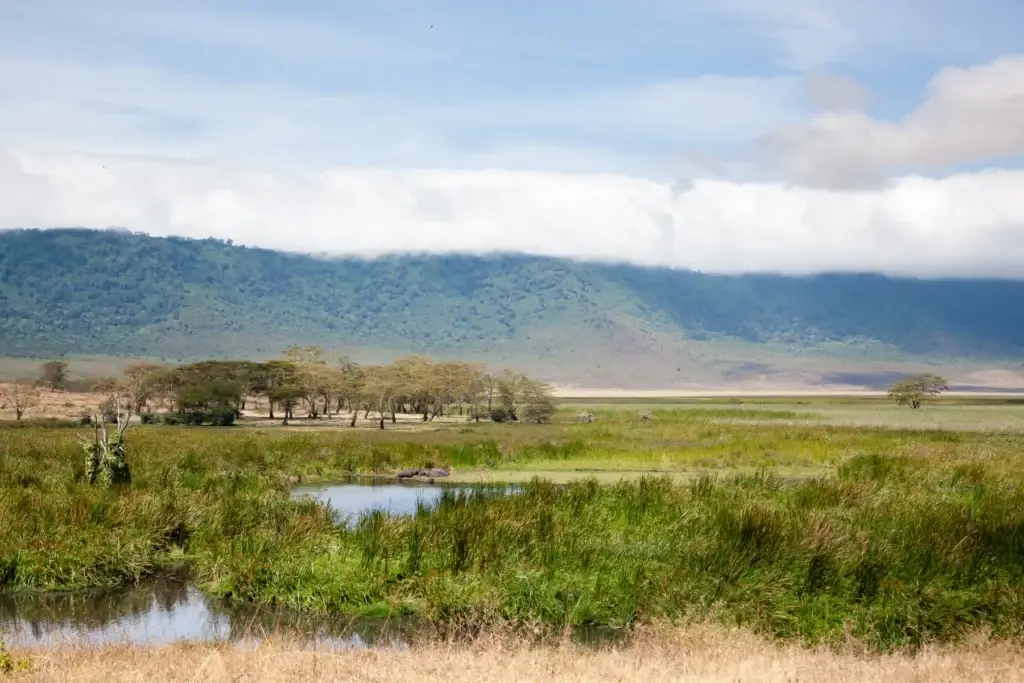
Aerial view across Ngorongoro Crater in Tanzania

Travelers interested in crater ecology, geology, archaeology and a change of altitude

Ngorongoro as a full highland chapter

Stay close enough for an early licensed descent and add a guided highland or archaeological experience when access allows.

Worth knowing

The crater can be busy, rules are strict, and a rushed one-night transfer can outweigh the experience.

A considered introduction

A luxury Tanzania safari begins with timing. Southern Serengeti and Ndutu suit the typical calving period, while central, western and northern bases answer different wildlife and landscape priorities.

Use an expert naturalist, protect two or three nights per ecosystem and keep light-aircraft moves purposeful. The result should feel spacious even when the geography is ambitious.

Advisor note

Advisor perspective: choose the Serengeti region from the month and current field reports, then add Ngorongoro only when it can be paced as a full chapter. Eight to ten nights is the strongest first-safari frame.

What stays with you

Signature experiences

Serengeti

A private drive shaped by current herd reports

Let a specialist naturalist adjust timing and area to current movement, weather and road conditions rather than following a rigid checklist.

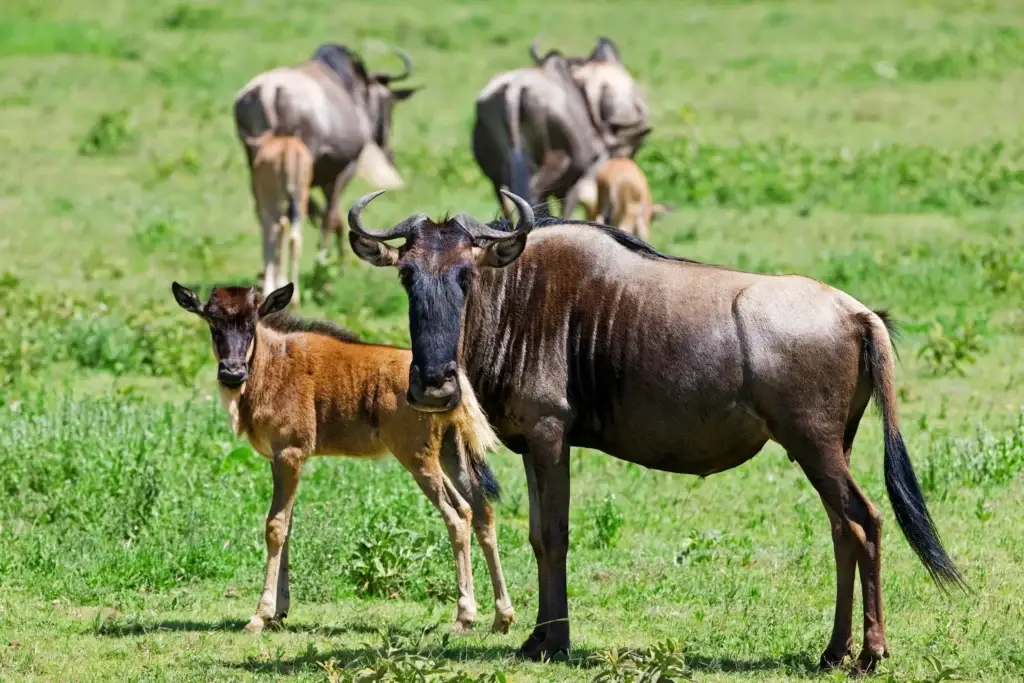
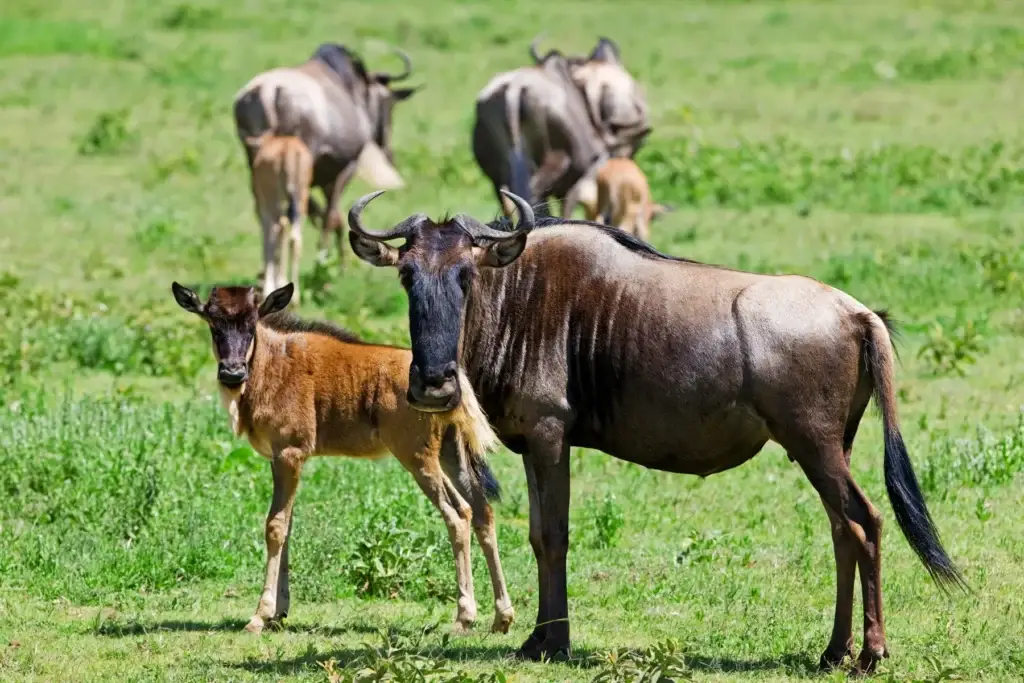
Adult wildebeest and calves on the Serengeti plains

Wildlife

Calving and predator ecology in the south

Observe how short-grass plains support mothers, calves and predators, with patient interpretation and no promise of a birth, hunt or sighting.

Natural history

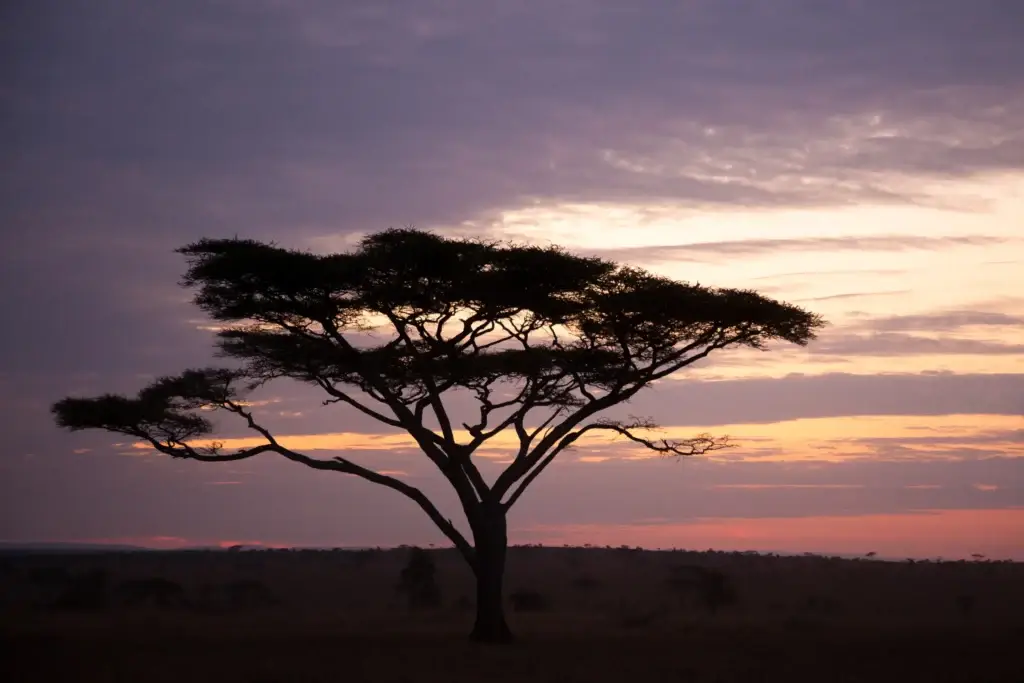
A quiet Serengeti dawn with a specialist guide

Begin with light, sound, tracks and behavior before turning the morning into a species count. Departure rules and conditions still govern the plan.

Ngorongoro

An early, licensed Ngorongoro Crater descent

Use a licensed guide, deliberate pacing and current NCAA rules. Wildlife density, traffic, visibility and picnic arrangements remain variable.

Walking

A ranger-led Ngorongoro highland walk

Choose an authorized route matched to fitness, weather and wildlife conditions, with a qualified ranger and a clear emergency plan.

Human history

Olduvai or Laetoli through deep time

Use a specialist guide to connect geology, archaeology and human origins, subject to current site access and conservation rules.

Travel restored

What makes Tanzania Safari a wellness destination?

Tanzania creates distance from modern overstimulation through wildlife time, natural light, walking and sustained attention to a living ecosystem. Its most meaningful wellness experiences are privately guided and rooted in local landscape and knowledge, not imported spa rituals.

Wellness role
A meaningful restorative layer
Best for
Travelers seeking lower stimulation, attentive nature time, cultural perspective and a lasting change in daily pace
Format
Natural-light rhythm, ranger-led walking, community-authored cultural context and specialist deep-time interpretation
Ideal commitment
One protected dawn, one guided walk and unstructured time within an eight- to ten-night safari
Intensity
Varies

For companions

Mixed-interest travel works when vehicle days, walking, cultural learning and rest are paced around ability and interest rather than forcing every traveler into one activity.

Seasonal lens

The approach works year-round, but heat, rain, altitude, insects, road conditions and wildlife determine the safest daily rhythm.

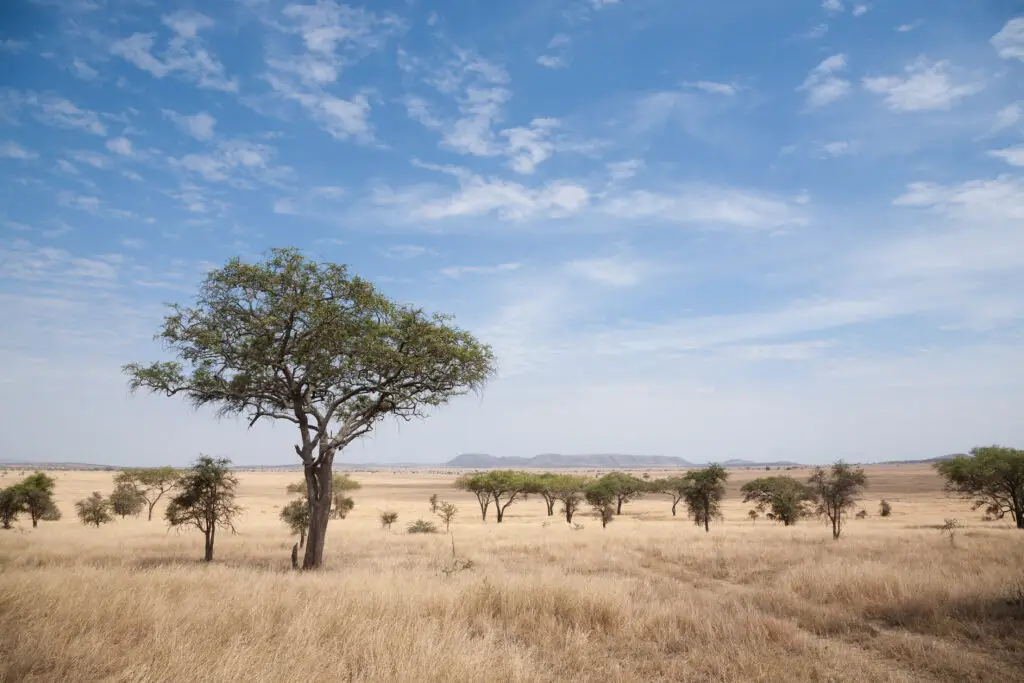
Dawn light over the plains of Serengeti National Park

Let dawn, sunset and low-light evenings reset the structure of the day

Natural-light recalibration

Use an unhurried dawn, midday rest and dimmer evenings with less device light. Camping research found earlier circadian and sleep timing after natural light-dark exposure, which supports routine design rather than treatment.

Duration
Daily rhythm across the safari
Intensity
Gentle
Best for
Long-haul travelers, executives and guests seeking a quieter daily cadence
Consider

This is not sleep therapy. Protect rest, hydration and medication schedules and consult a clinician for medical concerns.

Replace vehicle-speed scanning with tracks, sound, plants and terrain

Ranger-led attentional walking

An authorized NCAA walk can make attention slower and more precise. Nature research supports cautious psychological-restoration framing, while individual physical outcomes remain uncertain.

Duration
Two to four hours
Intensity
Moderate
Best for
Travelers comfortable with uneven terrain and close specialist interpretation
Consider

Use a qualified ranger, confirm route, fitness, wildlife and weather, and never walk independently in a controlled wildlife area.

Understand how cattle, water, pasture and season shape local life

Pastoral knowledge with reciprocity

Arrange an authorized community-led exchange in Ngorongoro with a consenting local host. The value is perspective and relationship, not a staged cultural performance or borrowed wellness ritual.

Duration
One focused conversation or visit
Intensity
Gentle
Best for
Culturally curious travelers who value context and reciprocity
Consider

Confirm community authorship, compensation, photography consent and current access. Never describe Maasai, Datoga or Hadza culture as therapy.

Exchange daily urgency for a longer view of landscape and human continuity

Deep-time perspective

A private specialist at Olduvai or Laetoli can connect the present safari to millions of years of geology and human history. Carry home one protected interval for reflection before action.

Duration
Two to three hours
Intensity
Gentle
Best for
Reflective travelers, families with older children and lifelong learners
Consider

Confirm the exact site, specialist, opening and accessibility. This is a cultural perspective, not a psychological intervention.

Wellness content is cultural and travel guidance, not medical advice. Research context does not guarantee an individual result. Confirm activity safety, altitude, heat, hydration, insects, mobility and clinician guidance where relevant.

Timing the journey

When to go

Late December through April typically favors Ndutu and the southern plains. May through October is broadly drier, but the correct Serengeti region still depends on the month and current movement.

Dec · Jan · Feb · Mar · Apr

Best

Southern plains and typical calving period

Weather
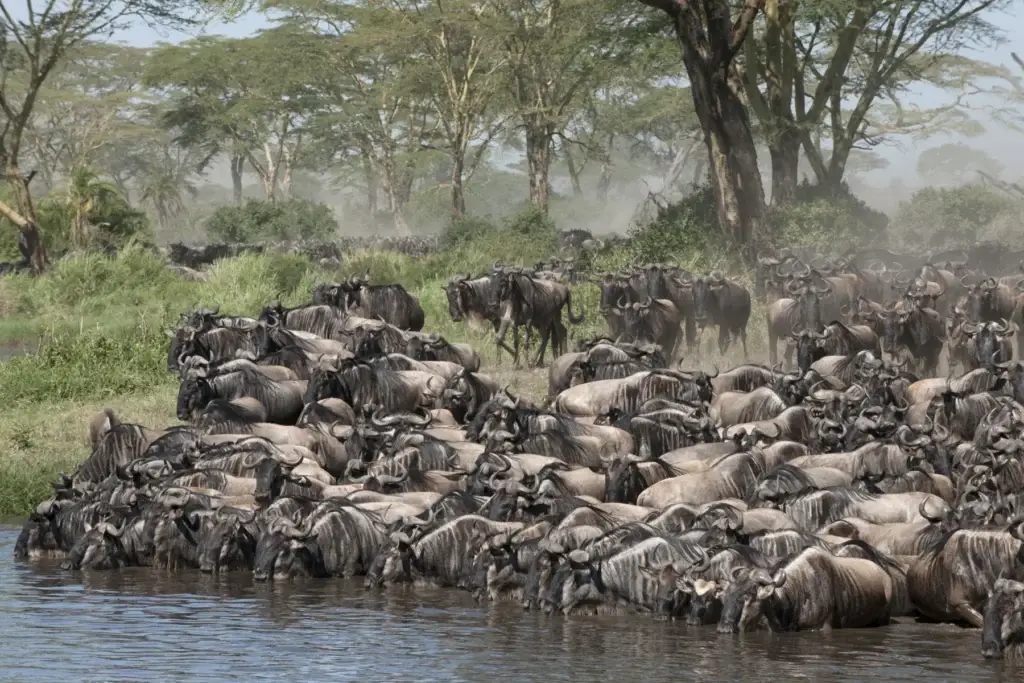
Ndutu typically receives migration herds from late December into April, with green plains and variable rain.
Crowds
Demand can be high around the most requested calving weeks. Vehicle density varies by exact area and day.
Best for
Best for travelers prioritizing southern-plains ecology, calves and predator behavior.

May · Jun · Jul · Aug · Sep · Oct

Good

Broadly drier general game-viewing period

Weather
Conditions are broadly drier, but temperature, dust and water availability vary across the northern circuit.
Crowds
Popular Serengeti sectors and Ngorongoro can be busy during peak travel periods.
Best for
Strong for classic game viewing when the camp region is matched to the month.

Nov · Dec

Conditional

Short-rain transition

Weather
Short rains can refresh the plains and influence southward movement, but onset and intensity vary.
Crowds
Demand changes around holidays and migration expectations rather than following one reliable quiet period.
Best for
Useful for flexible travelers who value changing landscapes and accept migration uncertainty.

Migration, calving, rain, road conditions and wildlife do not follow fixed dates. Recheck current field reports, weather, access and operating camps before every proposal.

Value, clearly framed

Understanding trip value

Build pricing from current premium air, exact camps, conservation fees, bush flights, private vehicles, guides and transfers. Use a date-specific proposal rather than an evergreen safari range.

What shapes the guidance

No numeric price is published. Season, camp location, private vehicle, aircraft, baggage, park fees, taxes, gratuities, single supplements and cancellation terms require live verification.

Journey logistics

Arrive well

Use Kilimanjaro International Airport for the northern circuit, with Arusha as the usual operating stage. International schedules, road sectors, bush flights, airstrips and soft-bag limits must be confirmed for the actual journey.

Primary gateway Kilimanjaro International Airport, then Arusha and the route-matched road or bush-flight plan

Premium commercial air

International arrival for the northern circuit

International originKilimanjaro International Airport

Scheduled commercial air, usually with at least one connection from the United States

No nonstop San Francisco service is assumed. Reconfirm airline, connection, visa, baggage and arrival timing before adding the Arusha or bush transfer.

Charter aviation

Arusha to the route-matched Serengeti airstrip

Arusha areaThe confirmed airstrip serving the selected Serengeti region

Scheduled bush flight or private charter when appropriate

Airstrip, aircraft, schedule, passenger weight, soft-bag limit, weather and road connection vary. Confirm every sector with the final operator.

Access and mobility

Safari vehicles, small aircraft, uneven airstrips, steps, dust and long drive intervals can create barriers. Confirm aircraft boarding, vehicle height, transfer assistance, room path, bathroom, emergency plan and the physical requirements of every walk.

Before you go

Practical planning notes

Etiquette

Check the current U.S. advisory

Tanzania is currently listed at Level 3 by the U.S. State Department. Review the live advisory and traveler-specific risk before booking.

Wellness

See a travel-health clinician

CDC guidance includes malaria and vaccine considerations. Obtain itinerary-specific advice well before departure.

Packing

Pack for small aircraft

Confirm soft-bag dimensions, weight procedures, medication, batteries and any mobility equipment with every operator.

Reservations

Use licensed guides and designated routes

Follow current park and NCAA rules for crater access, walking, roads, wildlife distance and cultural sites.

Etiquette

Treat cultural access as a relationship

Use community-authored arrangements, direct benefit and explicit photography consent. Avoid staged or extractive encounters.

The VH Luxe approach

How VH Luxe composes the journey

  1. Choose the seasonal Serengeti region

    Start with month, current movement and traveler priorities before selecting any camp or airstrip.

  2. Protect two or three nights per ecosystem

    Give the naturalist enough time to adjust to weather, roads and wildlife without turning the trip into daily packing.

  3. Add Ngorongoro with purpose

    Use the crater, highlands and human-history sites as a distinct chapter rather than a hurried transit stop.

  4. Finish with deliberate contrast

    Choose Zanzibar or another extension only when enough nights remain for a separate rhythm and resilient connections.

Paramjit Harika, VTA, CTA

Advisor-led planning

Your journey, personally considered

Paramjit Harika

Founder & Luxury Travel Advisor

I coordinate your hotel and room, premium air, transfers and key experiences as one considered journey, with one point of contact from planning through travel.

Good to know

Frequently asked questions

When is calving season in the Serengeti?

The southern-plains period usually runs from late December into April, with calving often associated with late January through March. Rainfall influences timing, so no date or sighting is guaranteed.

How many nights do I need for a Tanzania safari?

Eight to ten nights allows two Serengeti contexts and Ngorongoro without excessive transfers. Add more time for Zanzibar or another independent extension.

Is Ngorongoro worth including?

Yes for crater ecology, geology and human-history context, provided it is paced as a full chapter with an early licensed descent rather than a rushed stop.

Is the Serengeti better than the Masai Mara?

Choose Tanzania for the broader Serengeti system and southern-plains calving story. Choose Kenya when Mara access and its own seasonal river context are the priority.

Can families take a Tanzania safari?

Yes, but camp ages, walking rules, vehicle use, room layouts, food, heat, malaria planning and small-aircraft logistics must be matched to each child.

Can I combine the Serengeti with Zanzibar?

Yes. It works best as a separate ocean chapter after the safari, with enough nights and connection margin to avoid another compressed transfer.