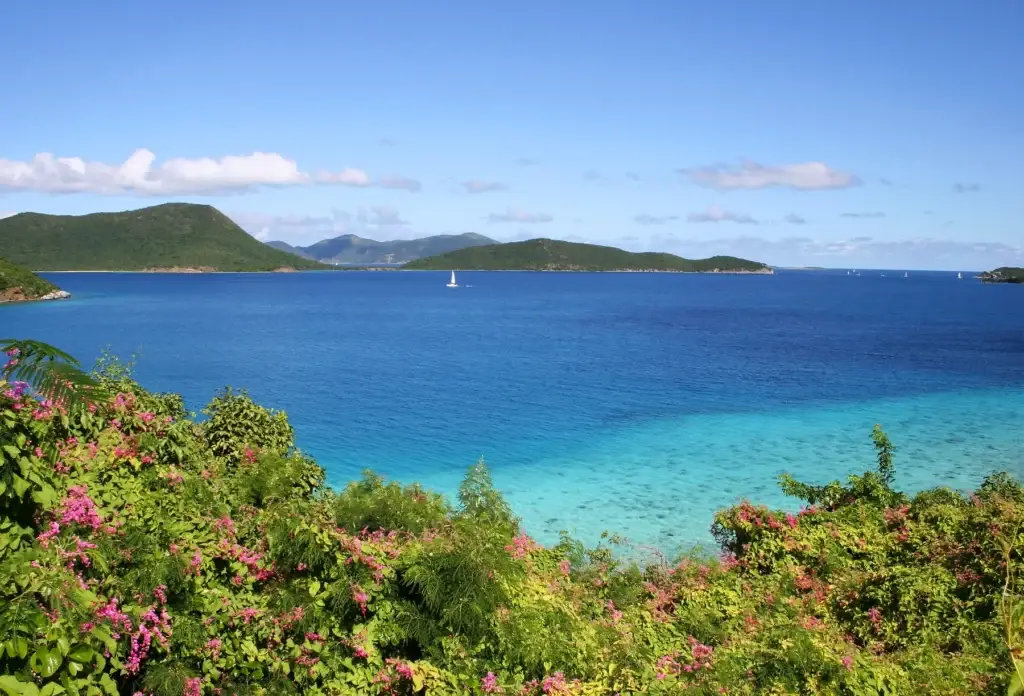
The VH Luxe destination guide

St. Thomas, St. John and St. Croix, U.S. Virgin Islands

Last updated 8 September 2026

Let access, protected landscapes and living island culture decide where your USVI time belongs.

Hero image: AI-generated editorial visualization, not a documentary photograph.

Recommended stay

8–

11 nights

Best time

December–April is generally driest; July–November requires tropical-weather flexibility.

Primary gateway

Cyril E. King Airport (STT) or Henry E. Rohlsen Airport (STX)

Journey context

Allow 8 nights for a deliberate two-island journey and 10 to 11 for all three, including a protected transfer and weather margin.

Curator’s verdict

A strong U.S. Virgin Islands trip selects carefully. St. Thomas is the most connected arrival and harbor chapter, St. John protects a park-led rhythm, and St. Croix adds cultural depth and a larger sense of place. The right journey may include two islands rather than all three.

Choose well

Which U.S. Virgin Island rhythm fits?

Choose the first island by access and daily purpose, then add only the island whose contrast justifies another transfer.

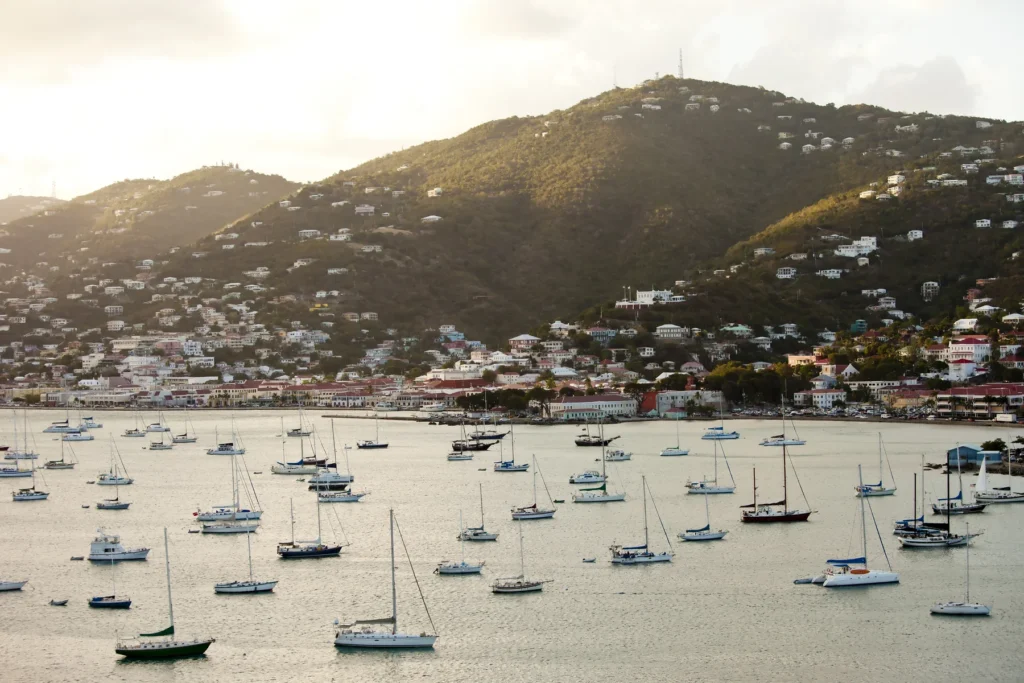
Sailboats Moored near Town by Lush Green Hills

Shorter stays, first visits, shopping, dining, yachting and travelers who value the broadest flight access

Choose St. Thomas for access and harbor energy

St. Thomas places STT, Charlotte Amalie and the St. John ferry corridor within one connected arrival chapter.

Worth knowing

Cruise traffic, hills and road congestion can compete with quiet; room position and daily timing matter.
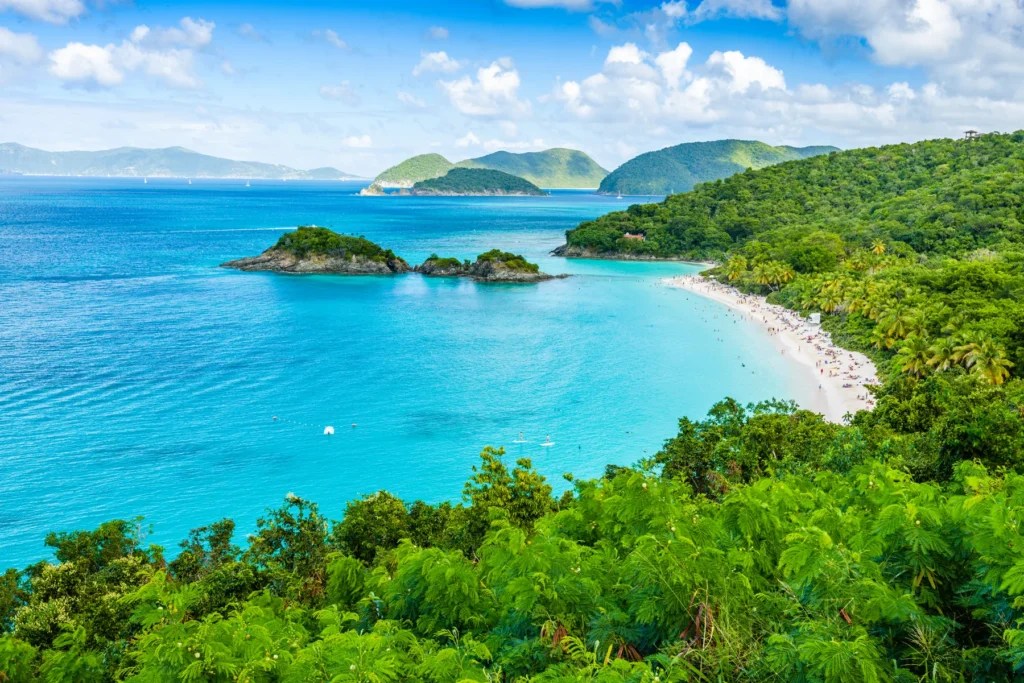

Trunk Bay, St John

Couples, nature-focused families, repeat visitors and travelers willing to plan around conservation rules

Choose St. John for a park-led reset

St. John makes Virgin Islands National Park, protected bays and a slower trail-and-water rhythm the center of the stay.

Worth knowing

There is no airport, roads are steep, services are smaller in scale and marine or trail plans remain condition-dependent.

Travelers who want Christiansted, Frederiksted, foodways, deeper history and a less compressed island geography

Choose St. Croix for culture and scale

St. Croix can hold a complete journey through town history, working communities and protected marine environments without borrowing energy from St. Thomas.

Worth knowing

It is not a casual road extension from St. Thomas or St. John; an air or sea transfer needs its own time and disruption margin.

Time-sensitive executives, milestone trips and multigenerational groups protecting recovery and transfer resilience

Use two islands unless the third changes the story

A two-island structure often preserves more depth, while all three works when ten or eleven nights and a flexible transfer day are available.

Worth knowing

Adding islands increases baggage moves, schedule dependence and the chance that weather displaces a signature day.

A considered introduction

Choose St. Thomas when flight access, Charlotte Amalie and short transfers matter. St. John shifts the center of gravity toward Virgin Islands National Park, small bays and a slower day shaped by trail, sea and current park rules. St. Croix stands apart in scale, with Christiansted, Frederiksted and protected marine landscapes that deserve more than a rushed excursion.

Allow eight nights for two islands and ten or eleven for all three. Treat every ferry, inter-island flight, park activity and boat movement as a dated operating decision. The British Virgin Islands are a separate foreign jurisdiction and are not part of this guide.

Advisor note

Advisor perspective: I would choose the islands around the traveler's real priority, then protect a weather margin before any important departure. VH Luxe Travels can coordinate preferred-partner value and tailored arrangements where applicable, with transport, authorized operators and park access confirmed for the exact dates.

What stays with you

Signature experiences

AI-generated editorial visualization of Fort Christian, Charlotte Amalie.
AI-generated editorial visualization, not a documentary photograph.

Harbor history

Read Charlotte Amalie beyond the harbor view

Use current public access at Fort Christian and qualified local interpretation to connect the harbor, Danish colonial rule, enslavement and the city that residents inhabit today. Do not reduce the chapter to shopping or picturesque architecture.

AI-generated editorial visualization of Virgin Islands National Park, St. John.
AI-generated editorial visualization, not a documentary photograph.

Protected landscape

Enter St. John through a ranger-informed park day

Choose one appropriate Virgin Islands National Park trail or public interpretation chapter, check current closures and conditions, and keep the day light enough for heat, terrain and ferry realities.

AI-generated editorial visualization of Virgin Islands National Park marine waters.
AI-generated editorial visualization, not a documentary photograph.

Marine stewardship

Use St. John waters by the park's rules

Work with an authorized operator and current National Park Service guidance for moorings, anchor limits, vessel size, snorkeling areas and weather. A beautiful bay is not permission to anchor or promise access.

AI-generated editorial visualization of Christiansted National Historic Site, St. Croix.
AI-generated editorial visualization, not a documentary photograph.

Human history

Stay with Christiansted's full historical record

At Christiansted National Historic Site, follow public interpretation that names the colonial economy, the labor of enslaved Africans and the island's continuing cultural life. Current hours and exhibits require confirmation.

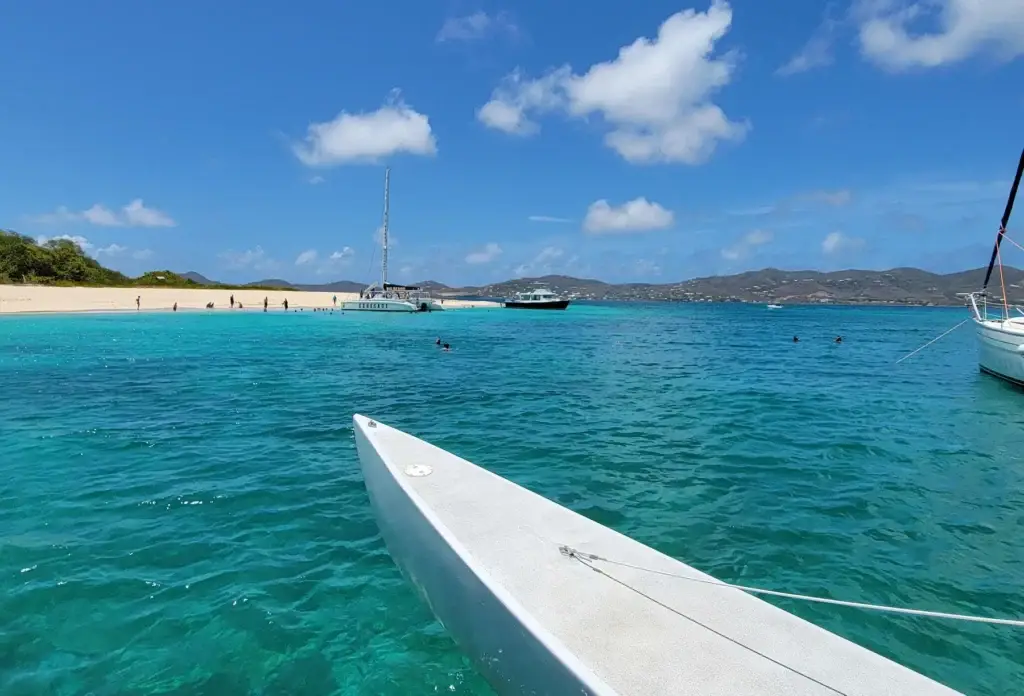
AI visualization from an unbranded vessel bow approaching the low green profile of Buck Island, St. Croix
AI-generated editorial visualization, not a documentary photograph.

Reef literacy

Approach Buck Island as a protected marine system

Use an authorized boat and current National Park Service rules to understand the reef, designated snorkeling areas and no-collection protections. Sea state, sun, swimmer ability and vessel access decide whether the outing is appropriate.

Travel restored

What makes St. Thomas, St. John and St. Croix, U.S. Virgin Islands a wellness destination?

What makes the U.S. Virgin Islands restorative?

The USVI supports restoration when a journey removes unnecessary transfers and lets harbor, protected coast and cultural attention work at different speeds. The value is in pacing and presence, not in a treatment claim or guaranteed outcome.

Wellness role
A meaningful restorative layer
Best for
Travelers who restore through sea horizon, protected nature, cultural depth and a schedule with real weather margin
Format
Light arrival day, protected-water attention, shade-aware walking and one full unstructured interval on each island
Ideal commitment
One low-demand arrival, one activity anchor per day and no same-day inter-island transfer tied to an irreplaceable experience
Intensity
Gentle

For companions

Strong for mixed interests when active trail or snorkel choices have a parallel low-exertion shore or cultural chapter

Seasonal lens

The drier winter window supports more predictable outdoor planning; warmer and storm-season dates require shorter exposures, stronger contingency planning and flexible water days.

Protect time and nervous-system margin by reducing logistics

Remove one island

Choose two islands when the third would create more transit than meaning. The benefit is a calmer schedule, not a medical intervention.

Duration
The whole journey
Intensity
Gentle
Best for
Travelers with limited time or high pre-trip workload
Consider

Personal health needs and travel tolerance require individual advice.

Create quiet attention without stacking water activities

Use the sea as a horizon, not a checklist

Reserve one shaded or floating interval for looking, listening and easy breathing, with sun, motion and swimmer safety managed conservatively.

Duration
Twenty to forty minutes
Intensity
Gentle
Best for
Travelers who settle through blue-space attention
Consider

Sea state, heat, sun sensitivity and motion sickness can change suitability.

Keep park and town exploration restorative

Walk within heat limits

Begin early, use shade and water, and turn back before fatigue controls the day. CDC guidance supports heat, UV and insect precautions for Caribbean travel.

Duration
A short morning chapter
Intensity
Gentle
Best for
Walkers, families and older travelers
Consider

This is not medical advice; seek clinician guidance for relevant conditions.

Replace attraction collecting with sustained cultural attention

Let history slow the gaze

Choose one institution or interpreted site and remain long enough to understand whose labor and memory shaped the place.

Duration
One focused visit
Intensity
Gentle
Best for
Culturally curious travelers
Consider

Use current public interpretation and do not infer culture from appearance.

Wellness descriptions explain pacing, gentle movement, nature attention and cultural presence. They do not promise diagnosis, prevention, treatment, cure, recovery or a particular physical or emotional outcome. Confirm personal medical suitability, transport, terrain, heat, weather, water conditions and qualified providers.

Timing the journey

When to go

December through April generally brings the driest planning window and strongest demand. May and June can offer a quieter transition with heat and showers. July through November requires explicit tropical-weather flexibility; the official Atlantic hurricane season runs from June 1 through November 30, and disruptive systems can occur outside expected patterns.

Dec · Jan · Feb

Best

Drier high season

Weather
Warm days, trade winds and generally lower rainfall still permit showers and rough seas.
Crowds
Holiday and winter demand can compress air, villas, boats and dining.
Best for
Best for first visits when access and budget are planned early.

Mar · Apr · May

Best

Late dry season into spring transition

Weather
Heat builds through spring while sea and rainfall patterns remain variable.
Crowds
Demand can ease after peak holiday periods, except around school breaks and events.
Best for
Strong for island depth with live park and transport checks.

Jun · Jul · Aug

Conditional

Warm green-season opening

Weather
Higher heat, humidity, showers and the opening of Atlantic hurricane season require flexible outdoor days.
Crowds
Some dates feel quieter, while festivals and family travel can create local peaks.
Best for
Useful only with flexible terms, heat-aware pacing and storm monitoring.

Sep · Oct · Nov

Conditional

Peak storm-risk and transition window

Weather
Tropical systems, heavy rain, rough seas and service pauses can disrupt a multi-island plan.
Crowds
Nominally lower demand does not offset operational uncertainty.
Best for
Choose only with suitable insurance, rebooking flexibility and a viable disruption plan.

Hurricane-season dates, rainfall, wind, swell, heat, transport, protected-area access, business openings and outdoor conditions change. Recheck official forecasts, local alerts, carriers, operators and every critical booking shortly before travel.

Value, clearly framed

Understanding trip value

Custom quote based on exact season, air routing, accommodation, inter-island transport where used, licensed transfers, authorized experiences, dining and contingency design. No public package price is stated.

What shapes the guidance

Eight to eleven nights for two travelers, with air, accommodation, dated inter-island transport, licensed transfers and authorized park or marine activities priced separately at proposal stage.

Journey logistics

Arrive well

Use STT for St. Thomas and onward St. John plans, and STX for St. Croix. St. John has no airport and depends on a confirmed ferry or authorized boat connection. A three-island itinerary needs a dated inter-island schedule rather than assumed daily continuity.

Primary gateway Cyril E. King Airport (STT) or Henry E. Rohlsen Airport (STX)

Premium commercial air

Arrive through St. Thomas

Confirmed U.S. or international originCyril E. King Airport (STT)

Scheduled air followed by licensed road transfer or a dated St. John ferry connection

Confirm citizenship and routing documents, baggage, accessible assistance, ferry terminal, sea conditions and the final island connection. A routing through a foreign territory changes document requirements.

Premium commercial air

Arrive directly on St. Croix

Confirmed U.S. or international originHenry E. Rohlsen Airport (STX)

Scheduled air followed by licensed ground transfer

Confirm flight, baggage, accessible assistance, current ground transport and the exact St. Croix base.

Boat, ferry or yacht

Connect St. Thomas and St. John by ferry

Red Hook or Charlotte Amalie, St. ThomasCruz Bay, St. John

Scheduled passenger ferry or authorized vessel

Use the live Virgin Islands Port Authority schedule. Confirm terminal, luggage, mobility, weather, last departure and onward road access. Do not apply this domestic connection to the British Virgin Islands.

Access and mobility

Confirm airport assistance, ferry ramps and boarding method, luggage handling, vehicle step height, steep roads, uneven historic streets, beach entries, trail gradient, heat exposure, shade, restrooms and emergency options for each island. St. John park paths and boat landings vary widely, and an accessible vessel or venue does not make the full route accessible.

Before you go

Practical planning notes

Arriving

USVI and BVI are different jurisdictions

The USVI is a U.S. territory. The BVI is a British overseas territory with separate passport, customs, immigration and marine rules.

Getting around

St. John has no airport

Every St. John arrival depends on a confirmed ferry or authorized vessel and a final road connection.

Etiquette

Protected water has exact rules

Use current NPS maps, moorings, designated areas, authorized operators and storm instructions rather than relying on custom or visual cues.

Wellness

Plan care and evacuation before island-hopping

Review medications, insurance, local care and medical evacuation coverage, especially for remote water activity or complex medical needs.

The VH Luxe approach

How VH Luxe composes the journey

  1. Arrive through the island that owns the first chapter

    Use STT for St. Thomas or St. John priorities and STX for St. Croix, avoiding an unnecessary transfer on day one.

  2. Give St. John a protected-landscape rhythm

    Pair one park or water anchor with a quiet afternoon and current NPS conditions.

  3. Give St. Croix its own cultural chapter

    Stay long enough for Christiansted, an island-scale road day and one protected marine experience.

  4. Hold the final day against disruption

    Keep the last night aligned with the departure gateway whenever weather or an inter-island connection could jeopardize the flight home.

Paramjit Harika, VTA, CTA

Advisor-led planning

Your journey, personally considered

Paramjit Harika

Founder & Luxury Travel Advisor

I coordinate your hotel and room, premium air, transfers and key experiences as one considered journey, with one point of contact from planning through travel.

Good to know

Frequently asked questions

Which U.S. Virgin Island is best for a first luxury trip?

Choose St. Thomas for access and harbor life, St. John for a park-led reset, and St. Croix for culture and scale. Two islands often make a stronger first journey than all three.

Do U.S. citizens need a passport for the USVI?

U.S. citizens do not need a passport for direct travel between the mainland United States or Puerto Rico and the USVI. Air travelers still need TSA-accepted identification, and a state license or ID must meet REAL ID rules unless another accepted document is used. USVI guidance also advises carrying citizenship evidence for departure. Any foreign routing is international.

Can St. Thomas, St. John and St. Croix be combined by ferry?

St. Thomas and St. John have established passenger-ferry links. St. Croix connections can be less frequent or use air. Build only from the live port and carrier schedules, with weather and baggage margin.

How many nights are enough for the USVI?

Allow about eight nights for two islands and ten or eleven for all three. A shorter trip should choose one primary island and perhaps one carefully timed extension.

What makes the USVI restorative?

The strongest pathway is a schedule with fewer transfers, protected coast, shade-aware movement and enough time for cultural attention. These experiences can support well-being but are not treatment or a promised result.

How should hurricane season change the plan?

The Atlantic season officially runs June 1 through November 30. Use flexible terms, suitable insurance, live NHC and local alerts, and a plan that can lose a boat or transfer day without collapsing.