The VH Luxe destination guide

Shenandoah & Virginia Blue Ridge

Choose the right Shenandoah district first, then let Skyline Drive, weather, mobility and history shape a measured Virginia Blue Ridge journey.

Recommended stay

3–

7 nights

Best time

Late April through May and September through October often suit travelers seeking comfortable movement and seasonal color, while summer offers the broadest visitor services and heavier demand. Winter can be beautiful but is a selective road-and-weather journey because Skyline Drive sections and facilities may close.

Primary gateway

Washington Dulles (IAD) for northern and central districts; Charlottesville (CHO) for the southern threshold

Journey context

Allow 3 to 4 nights for one park district, 5 to 6 for central Shenandoah plus a northern or southern chapter, or 6 to 7 for a measured two-threshold traverse.

Curator’s verdict

Shenandoah feels most luxurious when the ridge is not treated as a checklist. The strongest route chooses one threshold, one primary landscape and one credible alternative while leaving room for mountain weather and the park's complicated human history.

Choose well

Which Shenandoah structure fits?

Choose the district and threshold first, then give the ridge enough room to remain restorative.

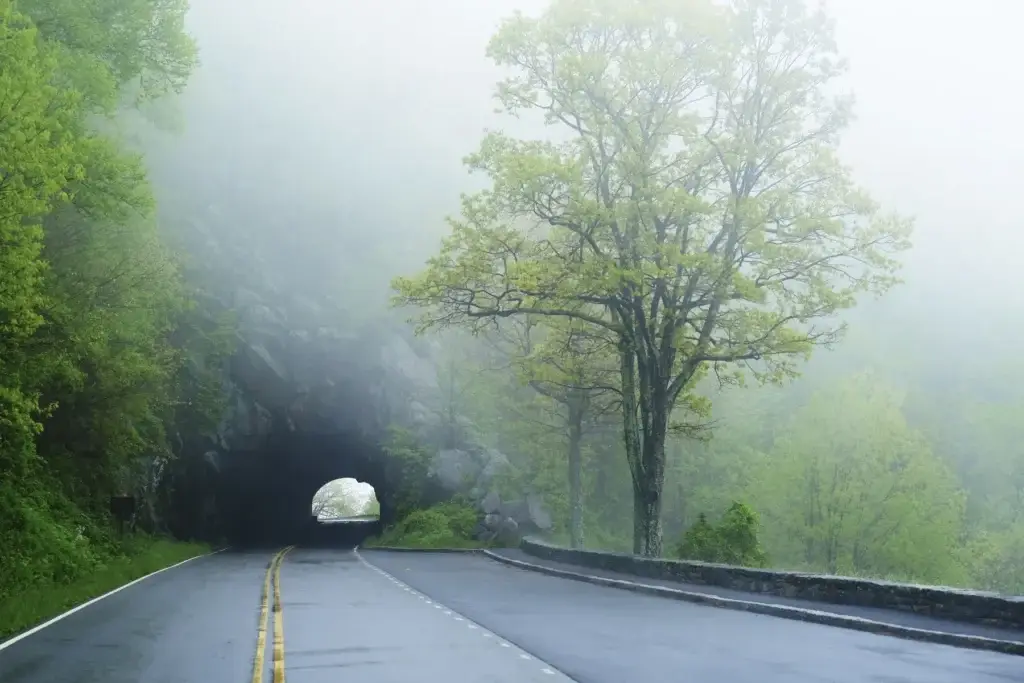
Tunnel on misty empty road, Shenandoah National Park, Virginia, USA

First visits, Big Meadows priorities and travelers who want one coherent park geography

Use Thornton Gap for a focused central chapter

A Luray or Thornton Gap threshold places Skyland, Big Meadows and the central district within a more disciplined daily frame without requiring the full length of Skyline Drive.

Worth knowing

It does not make Front Royal, Rockfish Gap or Old Rag effortless, and a famous trail should not be added merely because it appears close on a map.
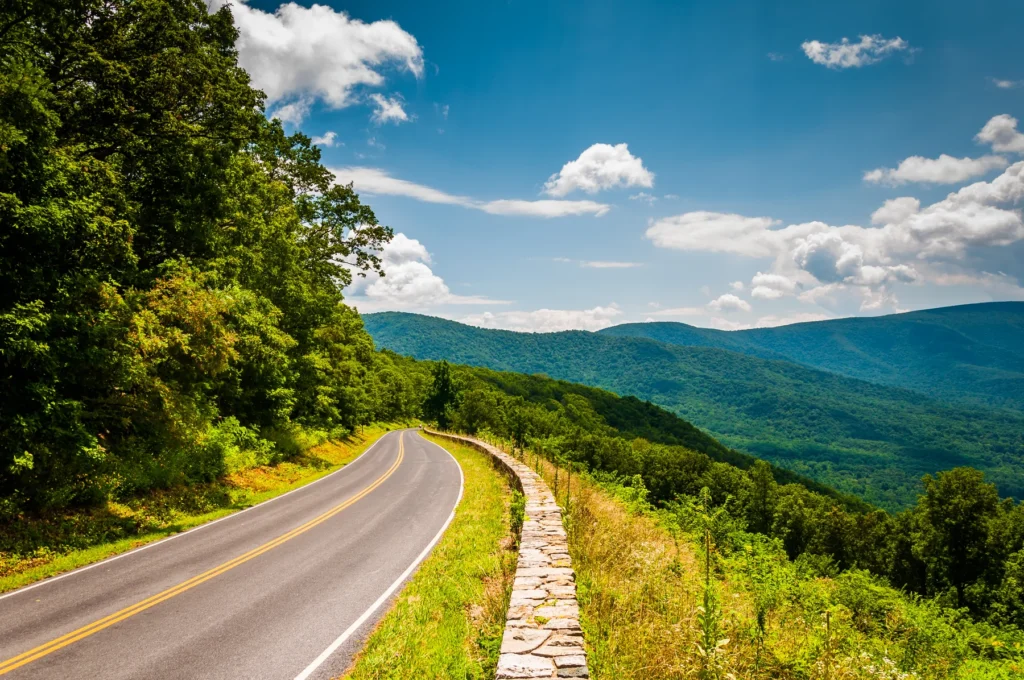
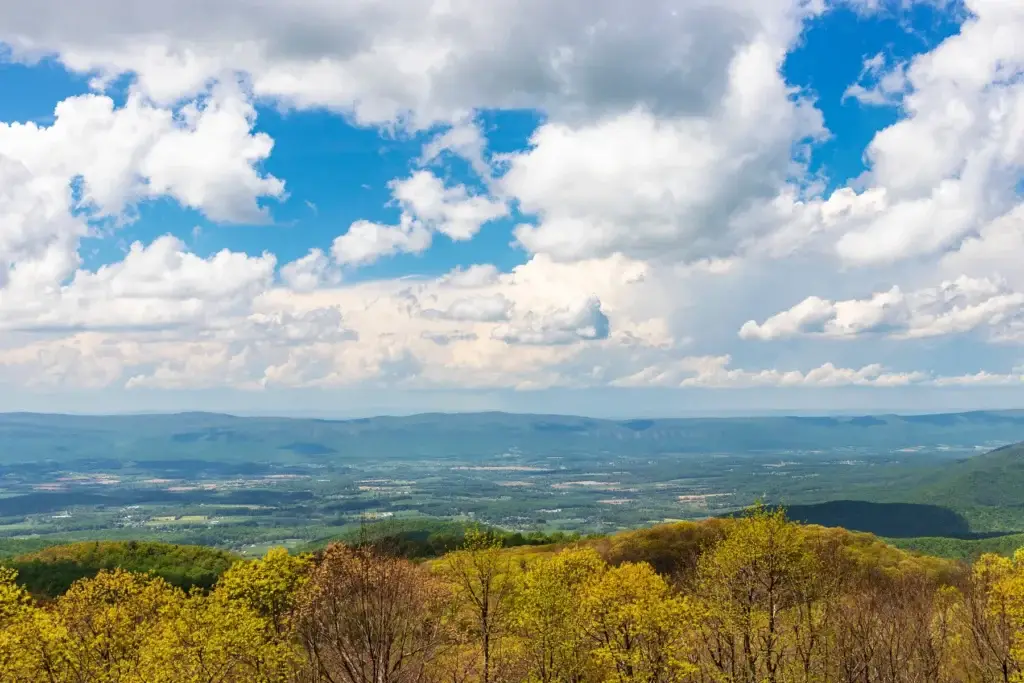
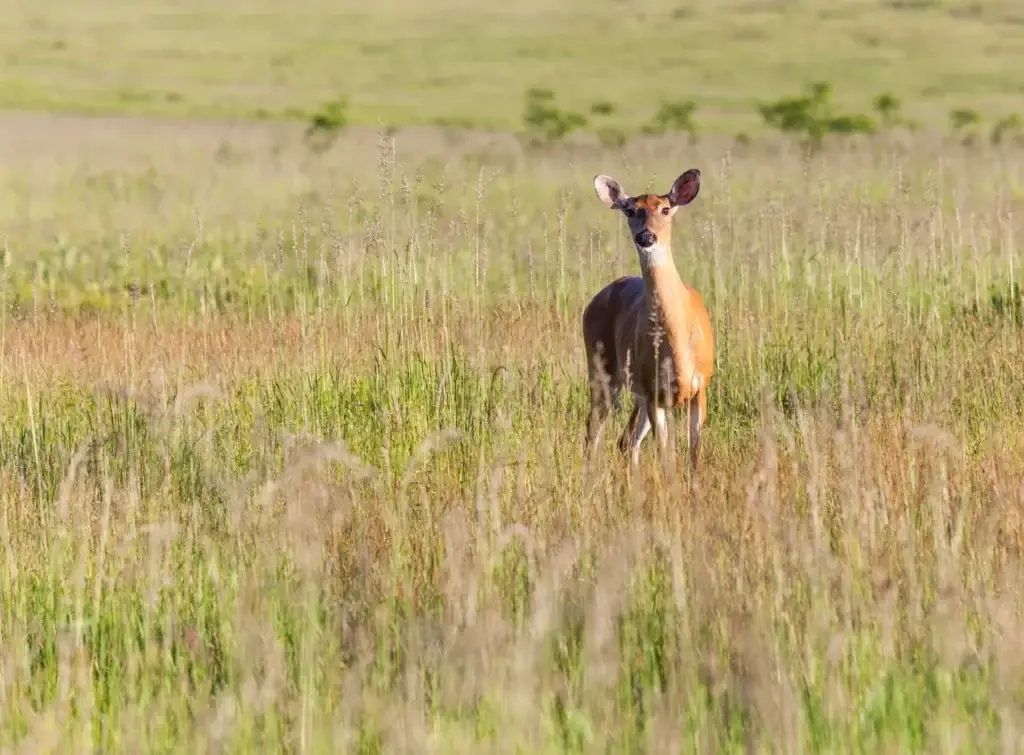
Skyline Drive And View Of The Blue Ridge Mountains, In Shenandoah National Park, Virginia.

Travelers pairing the southern district with a refined Virginia Blue Ridge stay

Choose Rockfish Gap for a southern Blue Ridge return

Waynesboro, Rockfish Gap and the southern threshold work well when the journey values quieter ridge intervals and an easy return to a separate Blue Ridge base.

Worth knowing

The central district and Old Rag become transfer-heavy, so this is not the right base for travelers whose priorities sit farther north.

Return visitors, photographers and travelers comfortable with one planned relocation

Traverse Skyline Drive only when the ridge is the purpose

A two-threshold route can reveal the park's changing forests, overlooks and human history without forcing a same-day out-and-back on the full 105-mile road.

Worth knowing

NPS estimates about three hours for the drive on a clear day before meaningful stops. Fog, wildlife, closures and congestion can extend it substantially.

Well-prepared hikers who specifically want the scramble and accept a condition-led turnaround

Treat Old Rag as a separate athletic decision

Old Rag belongs in the itinerary only when terrain, fitness, ticketing, parking and weather have been reviewed together. It should not define every Shenandoah visit.

Worth knowing

The day-use ticket is separate from the entrance pass and does not guarantee parking, safe rock conditions, comfortable temperatures or completion.

A considered introduction

Shenandoah National Park is long and narrow, with a 105-mile mountain road linking four vehicle entrances. Front Royal, Thornton Gap, Swift Run Gap and Rockfish Gap serve different days, so the stay should follow the chosen district rather than a generic map pin.

Allow 3 to 4 nights for one district and a route-compatible Blue Ridge stay. Five to seven nights supports a measured two-threshold route without turning every day into a transfer.

Advisor note

Advisor perspective: I would select the park district before the stay, then protect one primary purpose and a lower-demand replacement for each day. VH Luxe Travels can coordinate tailored arrangements where applicable, with every vehicle, authorized specialist, ticket and seasonal operation confirmed before travel.

What stays with you

Signature experiences

Skyline Drive road, historic stone wall or exact Shenandoah overlook with road context

Landscape and design

Read Skyline Drive as a designed mountain road

With an authorized historian or naturalist when confirmed, connect the road's overlooks, CCC construction and changing ridge ecology while weather and live closures determine the exact district.

Big Meadows at late light, twilight or under a documented night sky

Meadow ecology

Give Big Meadows a complete light cycle

Use a naturalist-led late-day interval for meadow ecology, remain for dusk when conditions permit, then let moon, cloud and current programming decide whether the night sky becomes the final chapter.

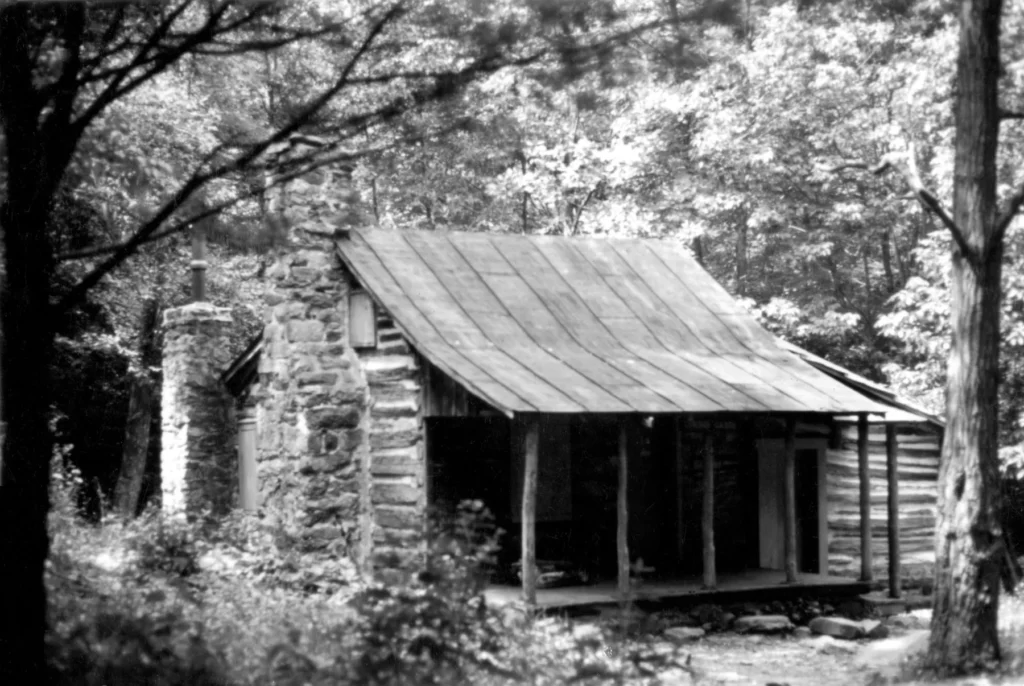
Exact Shenandoah cultural-history setting such as Byrd Visitor Center, Rapidan Camp, a documented home-site landscape or archival interpretation context

Living history

Hear the park through displaced families' voices

Begin with the JMU oral-history archive and current park interpretation to understand home sites, orchards, work, forced removal and segregation without reducing mountain communities to stereotype or nostalgia.

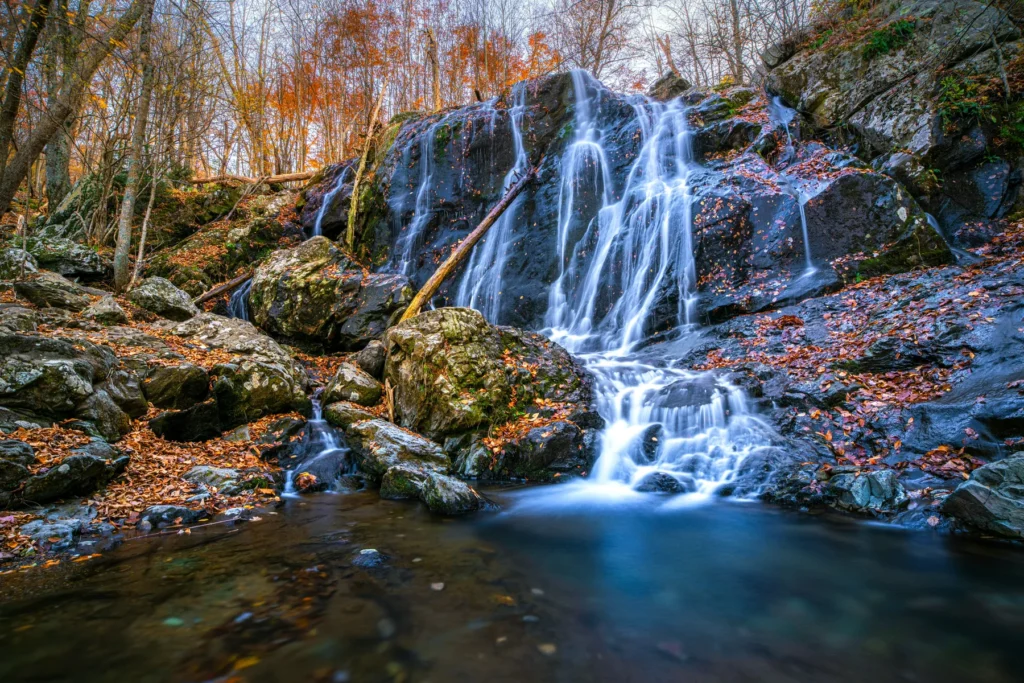
Dark Hollow Falls, Rose River Falls, Doyles River Falls or another exact Shenandoah waterfall

Forest and water

Choose one waterfall by conditions, not fame

Match a forest-and-water route to grade, high water, ice, crowds and footing, with a specialist when confirmed and a quiet forest alternative ready if waterfall rocks are unsafe.

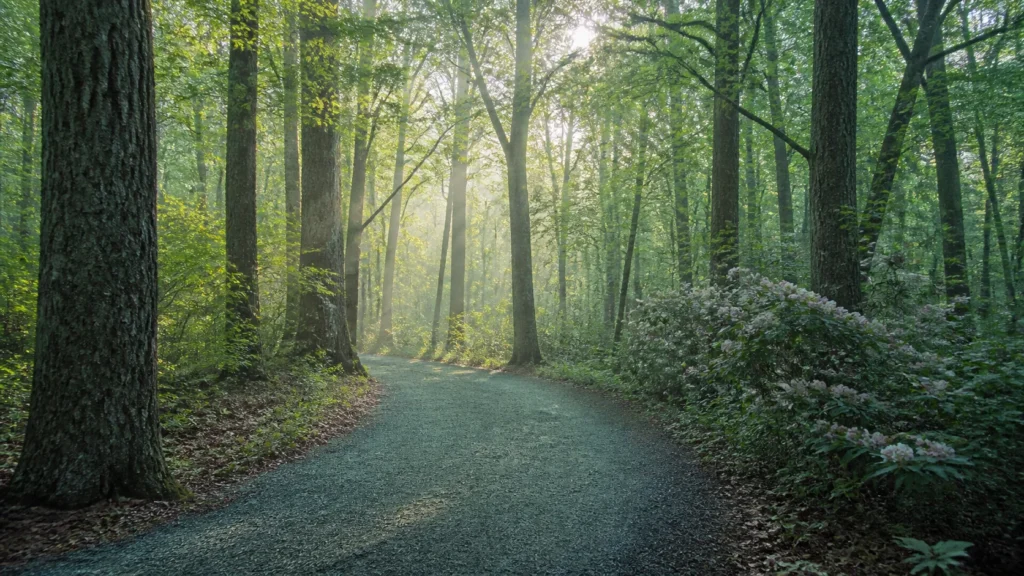
Limberlost Trail boardwalk, crushed-greenstone path or documented accessible forest context in Shenandoah

Accessible nature

Use Limberlost for attention without performance

Pair the accessible circuit's forest and wetland context with slow observation, seating and an exact mobility review, proving that a meaningful park day need not depend on a summit or scramble.

Travel restored

What makes Shenandoah & Virginia Blue Ridge a wellness destination?

What makes Shenandoah a wellness destination?

Shenandoah replaces achievement with ridge-to-hollow pacing: forest attention, meadow stillness, night-sky perspective and movement matched to weather. Reviews associate nature exposure with lower perceived stress and some short-term physiological stress measures, but the evidence is variable and does not make the park a treatment. The lasting takeaway is to choose one purpose and stop before conditions choose for you.

Wellness role
A primary reason to travel
Best for
Travelers seeking lower stimulation, purposeful movement, night-sky perspective and a more deliberate relationship with changing conditions
Format
Private or small expert-led interpretation when confirmed, protected quiet intervals and mobility-matched movement
Ideal commitment
One primary landscape each day, with the threshold, weather alternative and recovery period designed before departure
Intensity
Gentle

For companions

Strong for couples, solo travelers and multigenerational parties when driving, terrain, weather and accessibility are matched to the group.

Seasonal lens

Spring and autumn favor moderate temperatures and seasonal change. Summer supports the widest services but requires demand and heat planning. Winter is for travelers comfortable with closures and a deliberately narrow objective.

Replace checklist movement with one complete landscape

Ridge-to-hollow pacing

Let a naturalist when confirmed trace how elevation, forest and water change from overlook to hollow, followed by unstructured recovery instead of a second trail.

Duration
90 to 150 minutes
Intensity
Gentle
Best for
Travelers who want ecological meaning without performance pressure
Consider

Fog, ice, storms, road closures and uneven terrain determine the exact route.

Use darkness and scale to lower stimulation

Big Meadows twilight

Pair a private naturalist interval when confirmed with quiet meadow observation, then remain only if cloud, temperature, wildlife and moon conditions support safe stargazing.

Duration
60 to 120 minutes
Intensity
Gentle
Best for
Travelers seeking perspective, sensory quiet and minimal exertion
Consider

Night visibility, temperature and wildlife require conservative movement and current guidance.

Restore focus through sound, shade and slow observation

Forest and water attention

Choose an ability-matched forest route with a specialist when confirmed, pause for sound and texture, and finish before wet rock or fatigue turns attention into risk.

Duration
60 to 120 minutes
Intensity
Varies
Best for
Travelers who prefer sensory immersion to distance targets
Consider

Waterfall rocks, high water and ice can be dangerous. Use a forest-only replacement when conditions are poor.

Add meaning without turning history into consumption

Place-memory perspective

Listen to a selected first-person oral history before a historian-led landscape reading when available, allowing home sites, orchards and former routes to complicate the idea of untouched wilderness.

Duration
45 to 90 minutes
Intensity
Gentle
Best for
Travelers who connect well-being with context, humility and stewardship
Consider

Use descendant and archival voice carefully. No cemetery, home site, family story or community access is treated as private inventory.

Wellness descriptions do not promise diagnosis, treatment, biomarker change or longevity. Activities must be matched to weather, terrain, wildlife, mobility, darkness and individual medical needs.

Timing the journey

When to go

Late April through May and September through October often suit travelers seeking comfortable movement and seasonal color, while summer offers the broadest visitor services and heavier demand. Winter can be beautiful but is a selective road-and-weather journey because Skyline Drive sections and facilities may close.

Mar · Apr · May

Conditional

Spring

Weather
Rapid temperature changes, rain, fog, high water and possible lingering ice at elevation.
Crowds
Demand builds around bloom, clear weekends and holidays.
Best for
Forest change, waterfalls when safe and moderate ridge intervals.

Jun · Jul · Aug

Good

Summer

Weather
Warm, humid lower elevations with storms, fog and changing ridge conditions.
Crowds
High at famous trails, waterfalls, overlooks and weekends.
Best for
Broad visitor services, meadow ecology, night sky and early forest movement.

Sep · Oct · Nov

Best

Autumn

Weather
Crisp intervals can shift to fog, wind, rain or early ice.
Crowds
Foliage weekends can create the year's heaviest road and overlook demand.
Best for
Color, ridge photography, cultural interpretation and measured trail days.

Dec · Jan · Feb

Conditional

Winter

Weather
Cold, snow, ice, wind and frequent partial or full Skyline Drive closures.
Crowds
Generally low, with visitation concentrating after clear weather.
Best for
A selective lower-demand retreat built around live road status and accessible alternatives.

Skyline Drive, trails, fire and smoke conditions, high water, ice, visitor services, Old Rag operations and 2026 programs can change. Confirm the exact travel week.

Value, clearly framed

Understanding trip value

Custom quote based on exact district, accommodations, private vehicle, authorized specialists, tickets and seasonal availability. No public package price is stated.

What shapes the guidance

3 to 7 nights for two travelers; accommodations, transfers, guides, park logistics and confirmed experiences priced at proposal stage.

Journey logistics

Arrive well

IAD usually supports Front Royal or Thornton Gap planning, while CHO supports Rockfish Gap and a southern Virginia Blue Ridge stay. A confirmed private transfer can improve pacing but does not change Skyline Drive closures, entrance rules, parking or trail conditions.

Primary gateway Washington Dulles (IAD) for northern and central districts; Charlottesville (CHO) for the southern threshold

Premium commercial air

Arrive through IAD for the northern or central chapter

Confirmed origin cityWashington Dulles International Airport (IAD)

Scheduled air and confirmed ground transfer

Traffic, exact lodging, entrance choice, weather and stop requirements determine the transfer. Confirm the final route for the booked flight.

Premium commercial air

Arrive through CHO for the southern threshold

Confirmed origin cityCharlottesville-Albemarle Airport (CHO)

Scheduled air and confirmed ground transfer

Flight schedule, luggage, mobility assistance and the exact Waynesboro, Rockfish Gap or Blue Ridge stay must be confirmed together.

Access and mobility

Most Skyline Drive overlooks have accessible parking, and Limberlost is a fully accessible circuit with a crushed-greenstone surface. Confirm the exact vehicle, restroom, lodging room, visitor-center aid, trail grade, surface, seating, weather exposure and assistance requirement for the traveler's needs.

Before you go

Practical planning notes

Getting around

Choose one park district

Do not make the full 105-mile ridge a daily commute from one base.

Packing

Check Skyline Drive live

Weather can close sections at any time, including when lower valleys appear clear.

Etiquette

Protect wildlife distance

Stay at least 75 feet from most wildlife and 150 feet from black bears under current NPS guidance.

Reservations

Download before the ridge

Connectivity varies, so keep park maps, tickets, alerts and alternatives available offline.

The VH Luxe approach

How VH Luxe composes the journey

  1. Choose the threshold

    Select northern, central or southern Shenandoah from the landscapes that matter most.

  2. Set one purpose each day

    Give a meadow, forest, history or ridge chapter enough time to feel complete.

  3. Build the condition alternative

    Pair every road or trail objective with a lower-demand replacement.

  4. Place history inside the landscape

    Use park and descendant voices to understand what the idea of wilderness can erase.

  5. Return before the day frays

    Keep enough margin for wildlife, fog, closures and a restorative Blue Ridge evening.

Paramjit Harika, VTA, CTA

Advisor-led planning

Your journey, personally considered

Paramjit Harika

Founder & Luxury Travel Advisor

I coordinate your hotel and room, premium air, transfers and key experiences as one considered journey, with one point of contact from planning through travel.

Good to know

Frequently asked questions

How many nights do you need for Shenandoah National Park?

Allow 3 to 4 nights for one district, 5 to 6 for central Shenandoah plus another threshold, or 6 to 7 for a measured two-base Skyline Drive route.

Where should you stay for a luxury Shenandoah trip?

Choose the stay from the park district. Front Royal supports the north, Luray and Thornton Gap support the central district, and Waynesboro or a route-compatible Virginia Blue Ridge stay supports Rockfish Gap and the south.

Can you drive all of Skyline Drive in one day?

Yes when open, but NPS estimates about three hours for the full 105 miles on a clear day before meaningful stops. A two-threshold route is calmer when the ridge itself is the purpose.

Do you need a reservation for Shenandoah in 2026?

General park entry requires an entrance pass, not a timed-entry reservation. Old Rag's covered trails require a separate advance day-use ticket from March 1 through November 30. Recheck current rules before travel.

Is Shenandoah accessible for travelers with limited mobility?

Many Skyline Drive overlooks have accessible parking and Limberlost is a fully accessible circuit, but facilities, surfaces, assistance and weather exposure should be matched to the individual.

What should travelers understand about Shenandoah's human history?

The park landscape includes thousands of years of human use, the forced removal of hundreds of mountain families, segregation and descendant memory. Use current park interpretation and first-person oral histories rather than an untouched-wilderness narrative.