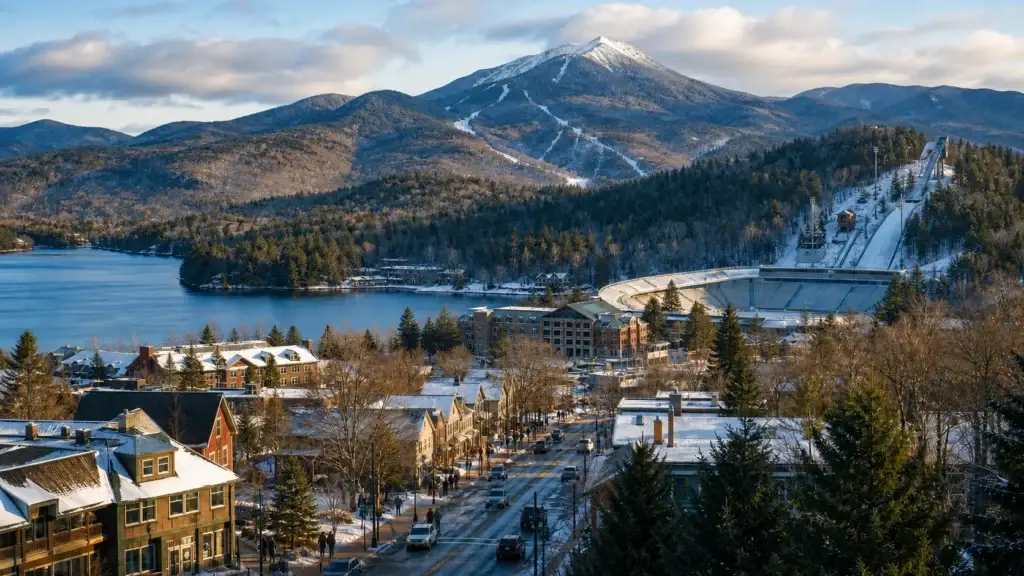
The VH Luxe destination guide

Lake Placid & Adirondack Great Camps, New York

Choose Olympic energy or a Great Camp forest-lake rhythm, then let conditions set the day's ambition.

Recommended stay

4–

8 nights

Best time

Summer and early autumn offer the broadest balance for Great Camp interpretation, open water and measured forest time. Winter is compelling for Olympic legacy and snow-based rhythm but requires cold, ice, road and activity-specific planning. Spring conditions can be highly variable, with mud, high water, insects and limited access.

Primary gateway

Adirondack Regional Airport (SLK) or another confirmed regional gateway

Journey context

Allow 4 or 5 nights for Lake Placid or one forest-lake base and 6 to 8 for a deliberate split with at least three nights in each identity.

Curator’s verdict

The Adirondacks feel most luxurious when achievement and restoration remain in balance. Lake Placid carries a living Olympic legacy, while the Great Camp tradition shows how architecture can edit the transition from shelter to forest and water.

Choose well

Which Adirondack rhythm fits the journey?

Choose Olympic energy or forest-lake depth first, then decide whether trip length supports both.

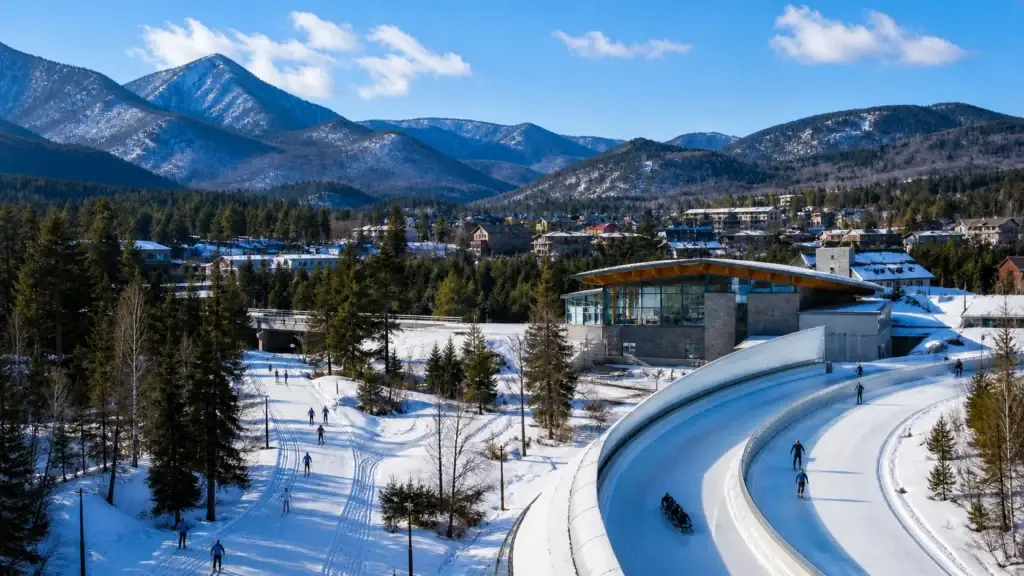
Lake Placid village, Olympic Center or a named Lake Placid Legacy Site with exact metadata

First visits, sports history, active families and travelers who value village ease

Choose Lake Placid for Olympic legacy and four-season energy

Use the Olympic Museum and one or two active legacy sites to connect the 1932 and 1980 Games with the community and venues that still train, compete and welcome visitors.

Worth knowing

Events, training and weather can change access, while a venue-led schedule can crowd out the quieter Adirondack landscape.
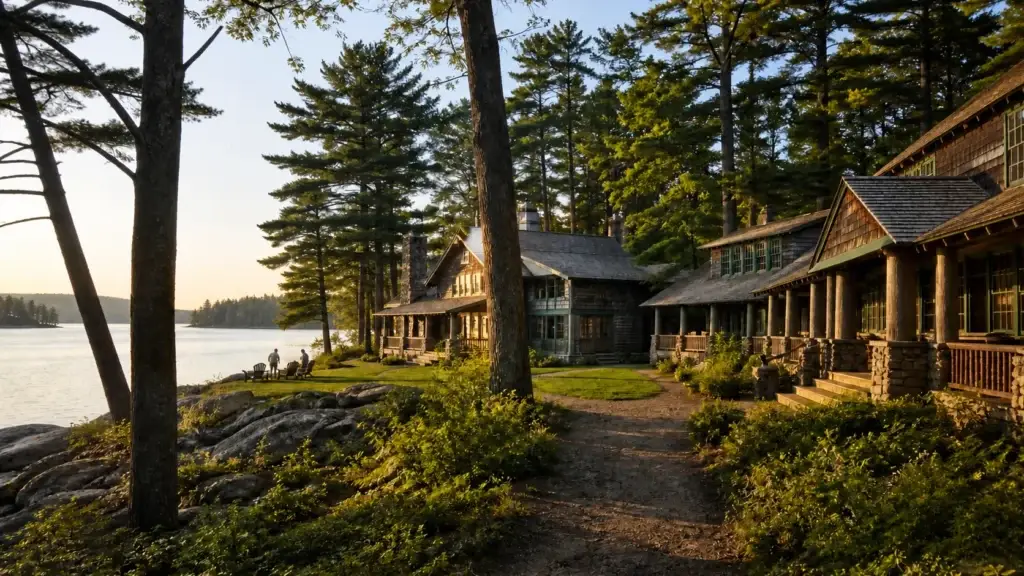
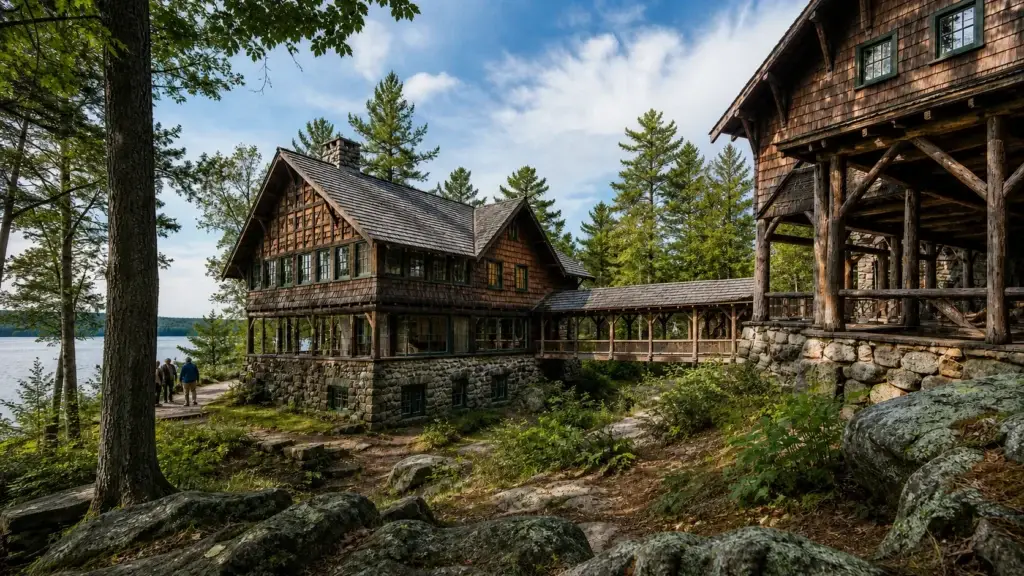
Great Camp Sagamore or Camp Santanoni public exterior with exact metadata

Design travelers, couples and executives seeking lower stimulation

Choose the Great Camp rhythm for architecture, water and woods

Let an interpreted Great Camp reveal compound planning, craft and the transition among building, porch, path, forest and lake, then leave part of the day unprogrammed.

Worth knowing

Public sites can require a substantial approach, fixed tour timing and seasonal operations, so access must be planned before the base is chosen.

Six- to eight-night journeys with equally strong sport, design and nature interests

Split the route only when both identities earn three nights

Use Lake Placid for Olympic and active chapters, then move once for a deeper Great Camp and forest-lake rhythm with less daily driving.

Worth knowing

A short split trades recovery for packing and transfer time across a large park.

Travelers with mobility needs, weather sensitivity or mixed outdoor ability

Let conditions set the day's ambition

Choose among an interpreted site, lower-intensity trail, paddle, rail trail or indoor Olympic chapter only after current conditions and traveler capacity are known.

Worth knowing

Protecting the journey may mean replacing a famous peak, changing a venue or lowering the planned intensity.

A considered introduction

Lake Placid suits travelers who want Olympic history, a walkable village interval and efficient access to active four-season experiences. The strongest plan chooses one or two legacy sites and interprets their continuing role rather than collecting attractions.

A Great Camp and forest-lake chapter suits travelers who want design history, craftsmanship, quiet water and a slower daily rhythm. Allow 4 or 5 nights for one identity and 6 to 8 when combining both with at least three nights in each base.

Advisor note

Advisor perspective: I would choose Lake Placid when Olympic legacy and active days lead, then add a Great Camp chapter only when design, forest and water deserve their own time. VH Luxe Travels can coordinate tailored arrangements where applicable, with every guide, venue, camp and access element confirmed before travel.

What stays with you

Signature experiences

Great Camp Sagamore or Camp Santanoni architecture with exact metadata

Architecture and design

Read Great Camp design as a complete system

Use a hosted public tour at Great Camp Sagamore or a condition-matched visit to Camp Santanoni to connect compound planning, local craft, infrastructure and landscape. The value is interpretation, not an assumption of private access.

Lake Placid Olympic Museum, Olympic Center, ski jumps or Mt Van Hoevenberg with exact metadata

Olympic legacy

Follow Lake Placid's Olympic legacy beyond one moment

Pair the Olympic Museum with one live legacy site so artifacts, architecture, training and community continuity form one story. Any guided, athlete-led or behind-the-scenes element is described only when confirmed.

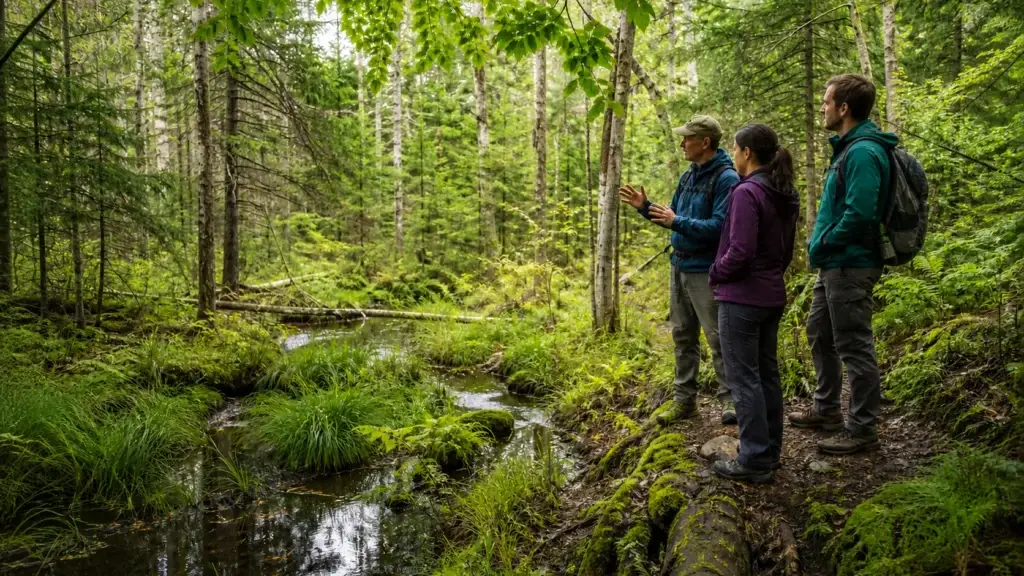
Named Adirondack Forest Preserve trail or accessible nature route with exact metadata

Forest ecology

Let a licensed guide choose the forest route

Ask a licensed guide to choose a public route around habitat, ability, weather and current DEC conditions rather than summit status. Carry a lower-impact alternative and a conservative turnaround point.

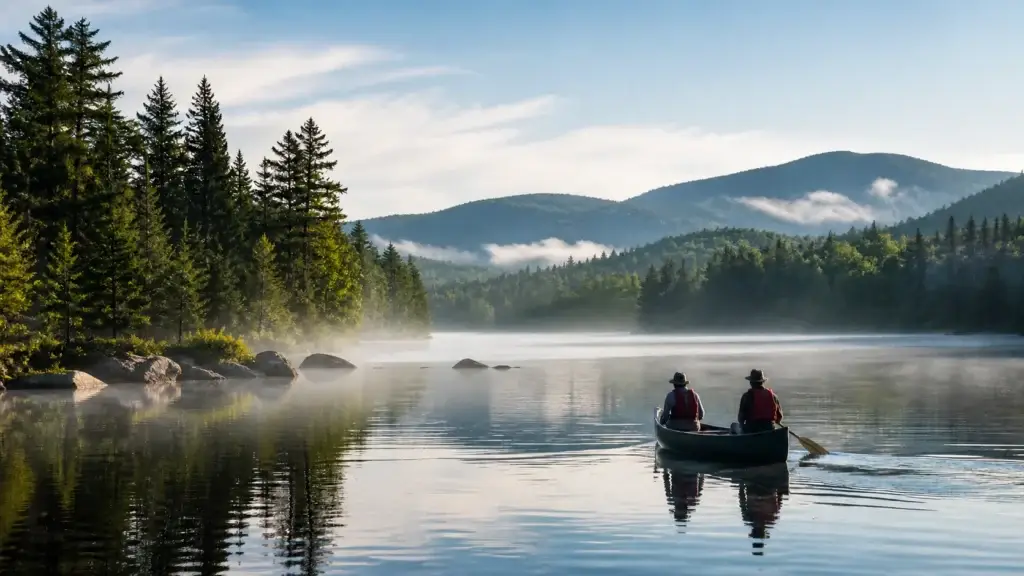
Named Adirondack lake or pond paddle with exact metadata and safe PFD use

Quiet water

Use quiet water to learn Adirondack scale

A guided flatwater paddle can make shoreline, forest continuity and distance legible without chasing speed. Confirm legal access, wind, water temperature, equipment, personal flotation devices and the traveler's comfort before launch.

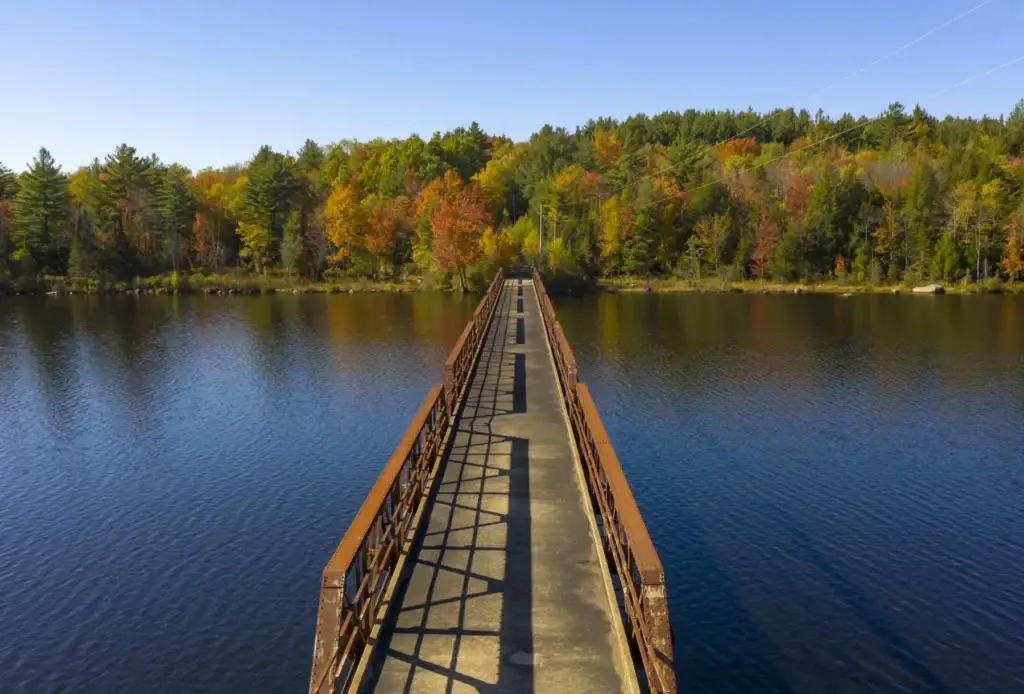
Pedestrian Bridge Lake Crossing Adirondack State Park New York

Measured movement

Take the lower-intensity line through the landscape

Use an open Adirondack Rail Trail segment for a walk or easy ride that connects community and forest without requiring a peak day. Confirm surface, shared use, equipment, weather and temporary closures.

Travel restored

What makes Lake Placid & Adirondack Great Camps, New York a wellness destination?

What makes Lake Placid and the Adirondacks a wellness destination?

The region can shift a traveler from constant output to sensory range through Great Camp thresholds, forest attention, quiet water and an Olympic understanding of effort followed by recovery. Green- and blue-space research supports cautious association and pathway language, but no Adirondack experience is medical treatment or a promised biomarker result.

Wellness role
A primary reason to travel
Best for
Executives, couples, active families and design-led travelers who want restoration with cultural and environmental meaning
Format
Great Camp threshold practice, condition-led forest attention, quiet-water observation and disciplined effort-recovery pacing
Ideal commitment
One meaningful physical effort, one low-stimulation interval and one live condition check each day
Intensity
Moderate

For companions

Strong for couples and multigenerational travelers when routes, water access, seating, stairs, cold exposure and exertion are individualized.

Seasonal lens

Summer and early autumn offer the broadest outdoor range. Winter can support deliberate cold-season rhythm for prepared travelers. Spring mud, high water, insects and variable access require the strongest flexibility.

Notice how designed transitions lower sensory demand

Great Camp threshold practice

Move slowly from interior to porch, path, forest and water while noticing material, temperature, sound and changing scale.

Duration
45 to 90 minutes
Intensity
Gentle
Best for
Design travelers, executives and guests who prefer low-impact attention
Consider

Use public or confirmed access only. Historic surfaces, stairs and approaches vary, and this is not clinical sensory therapy.

Replace peak performance with ecological literacy

Condition-led forest attention

Let a licensed guide choose a route around habitat, weather, capacity and a conservative turnaround, with time for observation rather than mileage.

Duration
60 minutes to half a day
Intensity
Moderate
Best for
Nature-led travelers and mixed-ability groups
Consider

Confirm DEC conditions, route, parking, reservations, footwear, water, insects, wildlife and emergency planning.

Widen attention through water, shoreline and steady movement

Quiet-water horizon

Use a safe overlook or guided flatwater paddle for slow observation and rhythm, with no need to turn the interval into a distance goal.

Duration
45 to 120 minutes
Intensity
Gentle
Best for
Couples, executives and reflective travelers
Consider

Confirm legal access, wind, storms, water temperature, PFDs, craft suitability and boarding. No health outcome is guaranteed.

Separate disciplined effort from constant exertion

Olympic effort-recovery rhythm

Use Olympic history to frame one appropriate physical challenge, then protect nutrition, warmth, sleep and an unprogrammed recovery interval.

Duration
Daily rhythm
Intensity
Varies
Best for
Active travelers who tend to overfill outdoor trips
Consider

Do not copy elite training loads. Medical conditions, altitude response, cold exposure and exercise suitability require qualified professional advice.

The takeaway is to keep effort and recovery in relationship: choose one real challenge, notice the transitions around it and leave enough quiet to absorb the landscape. Wellness experiences are not medical treatment. Discuss relevant risks with a qualified clinician and confirm current conditions, guide credentials and suitability.

Timing the journey

When to go

Summer and early autumn offer the broadest balance for Great Camp interpretation, open water and measured forest time. Winter is compelling for Olympic legacy and snow-based rhythm but requires cold, ice, road and activity-specific planning. Spring conditions can be highly variable, with mud, high water, insects and limited access.

Jun · Jul · Aug

Best

Summer forest and water season

Weather
Warm days can shift toward cool nights, storms, high water and wet trail conditions, especially with elevation.
Crowds
Events, weekends and limited lodging or vehicle supply reward early planning.
Best for
Great Camp tours, Olympic legacy, paddling and condition-matched forest time.

Sep · Oct

Best

Early autumn

Weather
Cooler air can bring rapid temperature changes, frost, rain and slippery or icy higher terrain.
Crowds
Foliage weekends and events can create strong road and lodging demand.
Best for
Design history, Olympic sites, measured trails and forest-lake scenery.

Dec · Jan · Feb · Mar

Conditional

Winter Olympic season

Weather
Cold, snow, ice, wind, limited daylight and fast-changing mountain conditions require winter-specific planning.
Crowds
Holiday and competition dates can alter rates, roads and venue access.
Best for
Olympic legacy, appropriate snow experiences and lodge recovery.

Apr · May · Nov

Conditional

Transitional season

Weather
Mud, high water, freeze-thaw cycles, insects, early snow or closed seasonal roads can narrow outdoor choices.
Crowds
Some periods are quieter, but reduced operations and access can outweigh the benefit.
Best for
Selected indoor culture, village time and low-impact outdoor alternatives.

Weather, road and trail conditions, water access, Olympic calendars, Great Camp programs and seasonal services change. Reconfirm all time-sensitive plans immediately before travel.

Value, clearly framed

Understanding trip value

Custom quote based on exact dates, accommodations, air, transfers, guide support, public programs, equipment and seasonal operations. No public package price is stated.

What shapes the guidance

4 to 8 nights for two travelers, with air, accommodations, licensed transfers, private guidance and confirmed experiences priced separately at proposal stage.

Journey logistics

Arrive well

Adirondack Regional Airport can serve some Lake Placid itineraries, while Plattsburgh, Burlington, Albany or Montreal may fit other air schedules. Local ride services and rental supply can be limited, so the airport and licensed ground transfer should be confirmed together after the final route is known.

Primary gateway Adirondack Regional Airport (SLK) or another confirmed regional gateway

Premium commercial air

Arrive through Adirondack Regional Airport

Confirmed origin with current serviceAdirondack Regional Airport (SLK)

Scheduled air followed by a prearranged licensed transfer

Confirm the live schedule, baggage, weather, rental or driver availability and exact first base before selecting this route.

Premium commercial air

Arrive through a larger regional airport

Confirmed domestic or international originPlattsburgh, Burlington, Albany or Montreal as the itinerary requires

Scheduled air followed by a confirmed licensed ground transfer

Airport choice depends on air service, border requirements where applicable, weather, road conditions, baggage, mobility and the first base.

Private aviation

Private aviation arrival

Confirmed originAirport selected by the licensed operator

Private aviation followed by a prearranged licensed ground transfer

Aircraft, airport suitability, runway, weather, slots, crew, handling, baggage and onward transport require operator confirmation.

Access and mobility

Confirm airport assistance, vehicle type, historic-site approaches, stairs, venue seating, tram or lift operation, trail grade, restrooms, dock and boat transfers, snow or ice surfaces and weather exposure against the traveler's exact needs. Adirondack routes range from accessible features to rugged backcountry.

Before you go

Practical planning notes

Reservations

Choose one identity first

A shorter stay should favor Olympic Lake Placid or a deeper Great Camp and forest-lake rhythm.

Etiquette

Interpret Great Camps accurately

Use public historic sites to understand design and craft without labeling every rustic lodge a Great Camp.

Wellness

Check conditions daily

Closures, mud, ice, water, weather, insects, wildlife and parking can replace the planned route.

Mobility

Protect the transfer plan

Regional transport is limited enough that every airport, driver and vehicle should be confirmed together.

The VH Luxe approach

How VH Luxe composes the journey

  1. Choose Olympic or forest-lake

    Let the trip's deepest purpose determine the first base.

  2. Read one legacy at depth

    Use a Great Camp or Olympic site with authoritative interpretation.

  3. Match effort to conditions

    Choose the route only after weather, access and traveler capacity are known.

  4. Carry home recovery discipline

    Keep one real effort, one meaningful pause and enough margin to absorb both.

Paramjit Harika, VTA, CTA

Advisor-led planning

Your journey, personally considered

Paramjit Harika

Founder & Luxury Travel Advisor

I coordinate your hotel and room, premium air, transfers and key experiences as one considered journey, with one point of contact from planning through travel.

Good to know

Frequently asked questions

How many nights do you need in Lake Placid and the Adirondacks?

Allow 4 or 5 nights for one identity. A balanced Lake Placid and Great Camp split usually needs 6 to 8 nights, with at least three nights in each base.

Should you stay in Lake Placid or near an Adirondack Great Camp?

Choose Lake Placid for Olympic history, village access and active four-season energy. Choose a forest-lake base when Great Camp design, quiet water and slower attention should lead.

What is an Adirondack Great Camp?

Great Camps are historically significant Adirondack compounds known for separate function-specific buildings, regional materials, rustic craftsmanship and close integration with forest and lake settings. A generic cabin or lodge is not automatically a Great Camp.

What is the best time to visit Lake Placid?

Summer and early autumn offer the broadest mix of Great Camp interpretation, open water and forest time. Winter suits Olympic and snow-based travel when cold, roads, ice, events and equipment are planned carefully.

Do you need a private driver in the Adirondacks?

Not every day, but a confirmed vehicle is often the most coherent option because the park is large and local ride services can be limited. The exact plan depends on the airports, bases, baggage, weather and mobility needs.

What makes the Adirondacks a wellness destination?

The region supports a shift from constant output to sensory range through Great Camp thresholds, forest attention, quiet water and an effort-recovery rhythm. These practices are not medical treatment or promised health outcomes.