The VH Luxe destination guide

Festivals of Japan

Choose one festival as the emotional center of the journey, then build the route around its season, place and living traditions.

Recommended stay

3–

5 nights

Best time

Choose by festival: February for Sapporo; April or October for Takayama; July for Kyoto; August for Aomori or Tokushima; October for Nagasaki. Reconfirm exact dates.

Primary gateway

The chosen festival’s airport or rail gateway, followed by an event-aware transfer to the exact hotel.

Journey context

Three nights supports one focused festival chapter; four or five allows arrival protection, cultural context, the main event and a quieter recovery day.

Curator’s verdict

Japan’s festival calendar is too rich for a checklist. The stronger journey chooses one defining celebration, secures the right base and viewing strategy, then protects enough time to understand the craft, faith or community behind what unfolds.

Choose well

Which festival should anchor the journey?

Choose by the kind of encounter the traveler wants, not by fame alone. Each festival creates a different route, physical rhythm and level of crowd exposure.

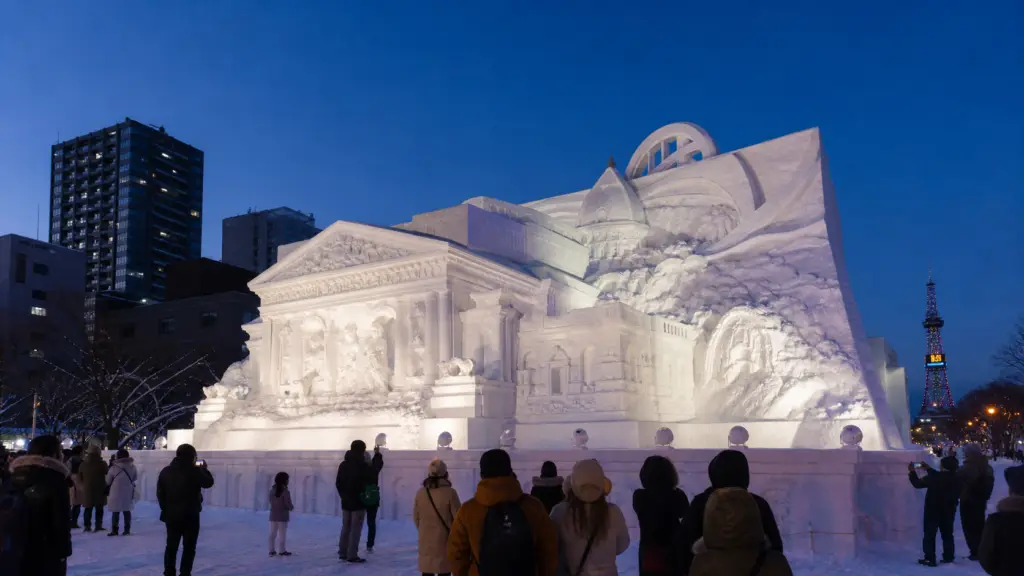
Monumental illuminated snow sculpture in Sapporo at winter twilight

Families, winter travelers and guests who value visual spectacle

Sapporo for winter scale and illuminated snow art

Use the Snow Festival for monumental sculpture, evening illumination and a wider Hokkaido food or onsen chapter.

Worth knowing

Cold, ice, multiple sites and peak demand require protected transfers, proper footwear and warming intervals.
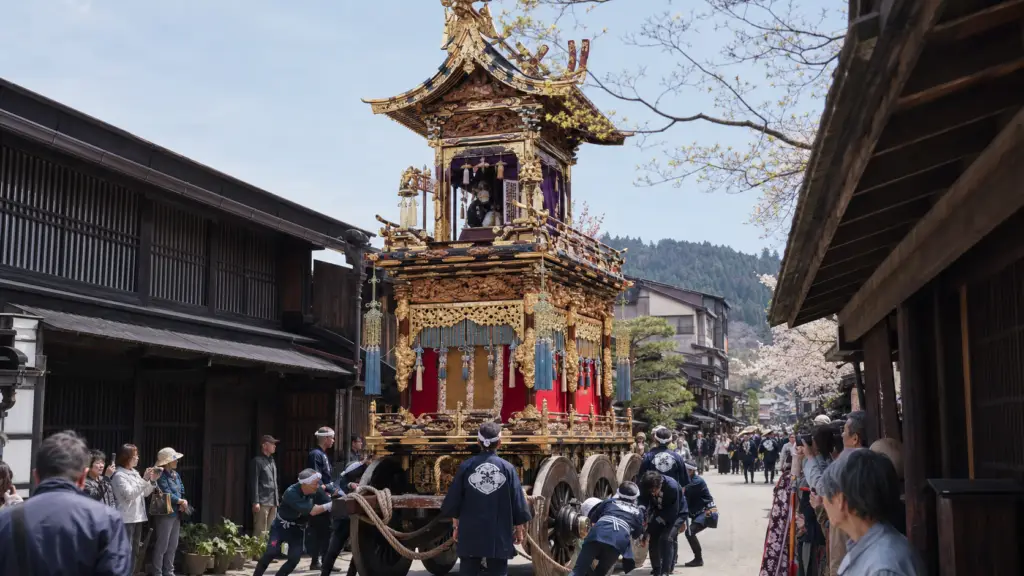
Ornate Takayama festival yatai float passing through a historic Japanese street

Craft, architecture and traditional-town enthusiasts

Takayama for float craft in a compact historic town

Choose spring or autumn Takayama when yatai floats, karakuri puppetry and a walkable old-town setting matter more than festival scale.

Worth knowing

Weather can keep floats in their storehouses, while limited inventory makes hotel location and early commitment decisive.

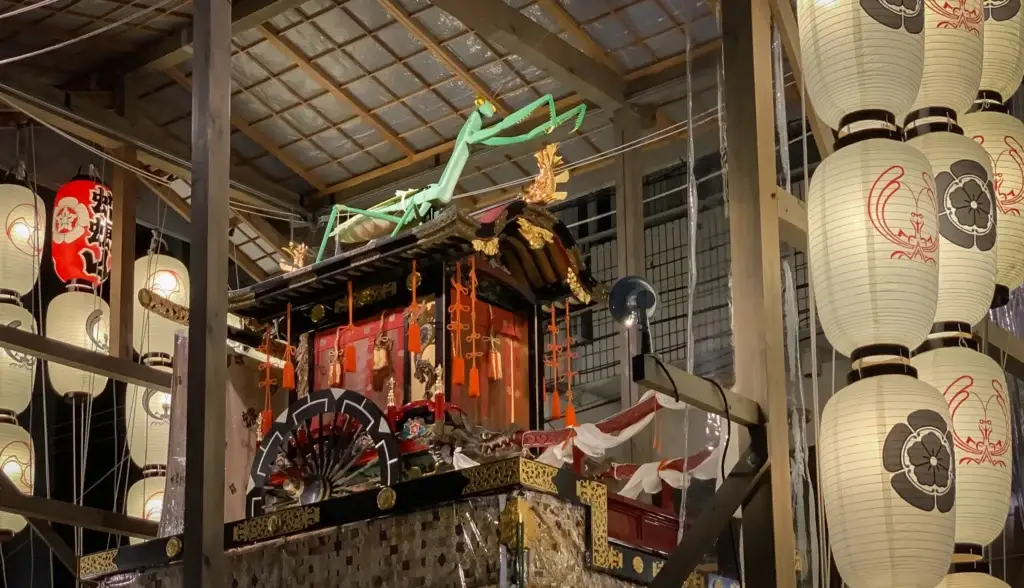
Illuminated yamahoko float and lanterns during Gion Matsuri in Kyoto

First-time cultural travelers and guests already planning Kyoto

Gion Matsuri for ritual and decorative arts in Kyoto

Gion Matsuri unfolds through July, with the July 17 and 24 processions as visible highlights of a much larger Yasaka Shrine festival.

Worth knowing

Heat, crowds and a month-long calendar make it essential to choose the specific procession, evening or cultural lens that matters most.

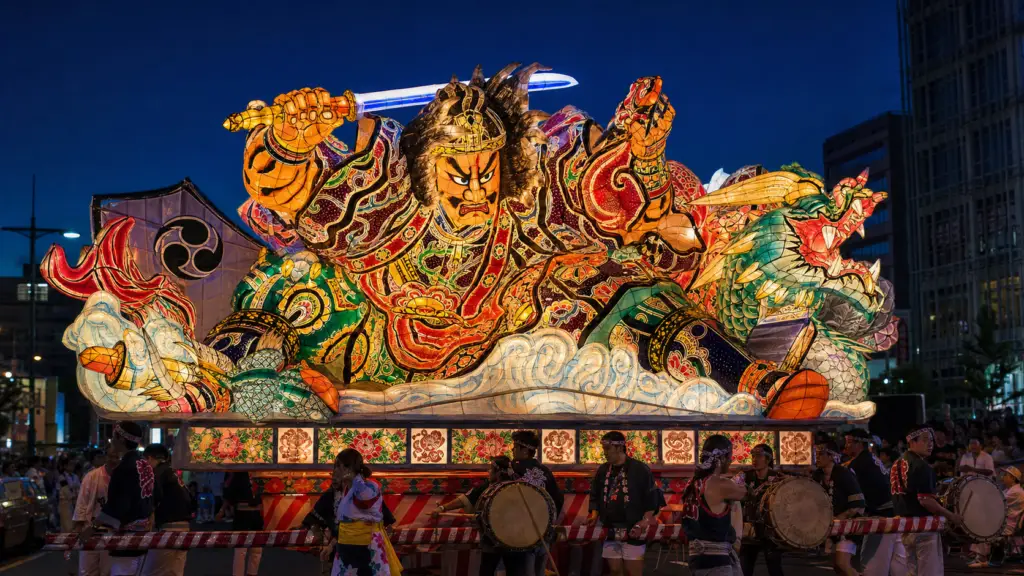
Illuminated Aomori Nebuta-style warrior float moving through a nighttime festival procession

Visual-art lovers, photographers and active multigenerational travelers

Aomori Nebuta for illuminated sculpture and collective energy

Nebuta combines immense illuminated figures, specialist makers, music and haneto dancers in a powerful evening procession.

Worth knowing

The experience is loud, crowded and physically demanding. Reserved seats or official participation should follow current rules.

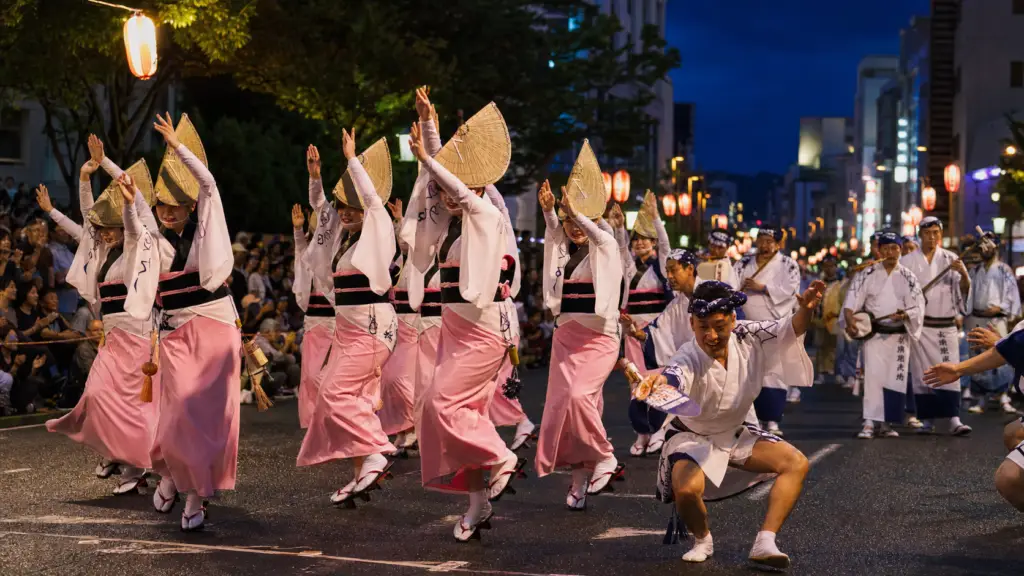
Awa Odori dancers and musicians performing in Tokushima at blue hour

Travelers who want movement, music and a Shikoku route

Awa Odori for dance and participation

Tokushima becomes a city of ren dance groups from August 12 to 15, with spectator and approved visitor-participation formats.

Worth knowing

Heat, dense crowds and variable performance areas require clarity about whether the traveler wants seating, context or participation.

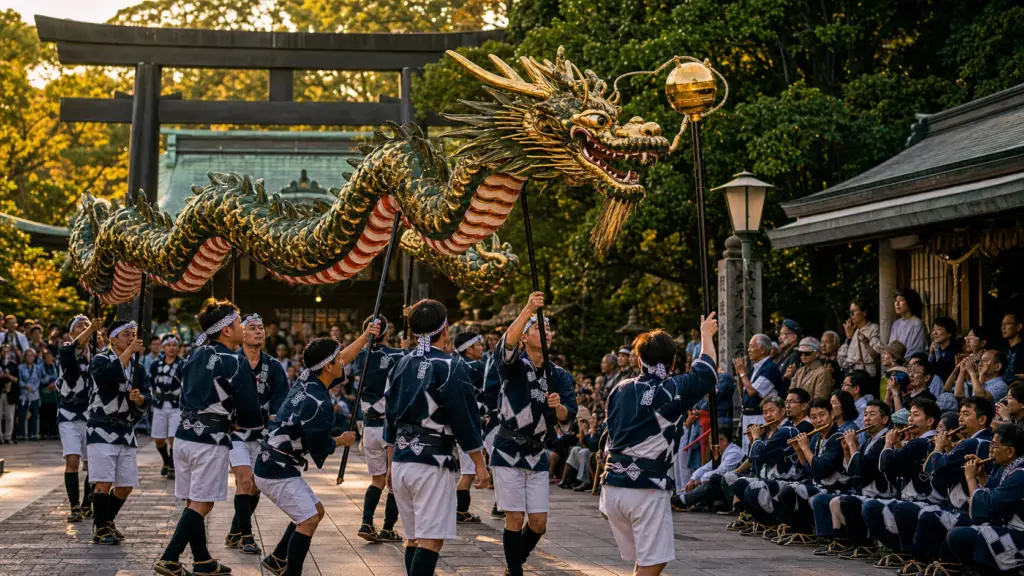
Ja Odori dragon dance performers and musicians in a Nagasaki festival setting

Repeat Japan visitors and travelers interested in maritime exchange

Nagasaki Kunchi for cross-cultural performance history

The Suwa Shrine festival reflects Nagasaki’s long encounter with Chinese and European influences through performances that rotate among local districts.

Worth knowing

The performing districts and program change by year, so a favorite dance or visual element cannot be assumed.

A considered introduction

A Japanese matsuri may be a shrine observance, a neighborhood responsibility, a seasonal act of gratitude or a living performance tradition. The spectacle matters, but it is only the visible layer. Float makers, dancers, musicians, priests, local associations and families sustain the event long before a visitor arrives.

Three to five nights supports a festival-focused chapter. A longer Japan journey can place that chapter beside Kyoto, Tokyo, Hokkaido, the Japan Alps, Shikoku or Kyushu. The route should follow the chosen festival rather than trying to collect several distant celebrations in one trip.

Advisor note

Advisor perspective: I would choose the festival before choosing the hotel or wider route. Then I would protect arrival buffers, reserve official viewing where useful and leave enough unstructured time for the traveler to understand the place beyond the procession.

What stays with you

Signature experiences

Illuminated yamahoko float and lanterns during Gion Matsuri in Kyoto

Kyoto ritual

Read Gion Matsuri beyond the procession

Use a qualified cultural specialist to understand Yasaka Shrine, neighborhood stewardship, float textiles and the difference between the July 17 and 24 festival phases. Viewing seats or special access require direct confirmation.

Explore the experience
Ornate Takayama festival yatai float passing through a historic Japanese street

Living craft

Follow Takayama’s yatai and karakuri traditions

A local historian or craft specialist can make float construction, decorative work and mechanical puppetry legible before the public program. Weather and preservation rules determine what can be seen.

Explore the experience
Illuminated Aomori Nebuta-style warrior float moving through a nighttime festival procession

Illuminated sculpture

Meet Nebuta through its makers

Begin with the documented work of Nebutashi masters and, where useful, the WA-RASSE museum before an official evening procession. This turns scale and color into an authored craft story.

Explore the experience
Awa Odori dancers and musicians performing in Tokushima at blue hour

Dance

Learn the rhythm before joining Awa Odori

A legitimate local introduction can explain ren dance groups, musical calls and the official visitor-participation format. Participation should follow current rules rather than being improvised.

Explore the experience
Ja Odori dragon dance performers and musicians in a Nagasaki festival setting

Maritime history

See Nagasaki’s exchanges expressed in performance

A specialist can connect Suwa Shrine, Nagasaki’s port history and rotating district performances without reducing the festival to dragon-dance imagery alone.

Explore the experience
Monumental illuminated snow sculpture in Sapporo at winter twilight

Winter art

See Sapporo by daylight and after illumination

Pair a carefully paced Odori and Susukino plan with one warm indoor meal or private recovery interval. Weather, ice, lighting schedules and site operations shape the route.

Explore the experience

Travel restored

What makes Festivals of Japan a wellness destination?

Festival travel can restore a sense of participation, attention and season when it is not reduced to spectacle. The useful transformation is learning to enter a collective rhythm with humility: observe before acting, move when invited and leave enough ma, or meaningful interval, around the main event.

Research reviews suggest that arts engagement and structured dance can support aspects of well-being, but a festival visit is not a clinical intervention. The value here is cultural connection, purposeful movement and a more memorable relationship with time.

Wellness role
A meaningful restorative layer
Best for
Culture-led travelers who value collective energy, purposeful movement, seasonal awareness and a meaningful reason to slow the surrounding itinerary
Format
Private cultural interpretation, approved participation, protected recovery intervals and a route that respects heat, cold, crowds and sensory load
Ideal commitment
One festival-centered evening or day, one expert-led context session and one deliberately unscheduled recovery interval
Intensity
Varies

For companions

Strong for mixed-interest parties when spectator, participation and lower-stimulation options are planned separately.

Seasonal lens

Winter requires cold and ice readiness; summer requires heat and crowd management. Participation, seating and recovery options vary by festival and venue.

Illuminated yamahoko float and lanterns during Gion Matsuri in Kyoto

Protect the meaningful interval before and after a high-stimulation cultural encounter

Ma around the main event

Do not schedule the festival between transfers and dinner reservations. A quiet arrival, one defined encounter and an open interval afterward allow attention to settle and memory to form.

Duration
Half day around the defining event
Intensity
Gentle
Best for
Travelers who value depth more than event count
Consider

Ma is a cultural and aesthetic concept, not a therapy or guaranteed state of calm.

Awa Odori dancers and musicians performing in Tokushima at blue hour

Experience rhythm, coordination and social participation without performing for attention

Odori as learned communal movement

Where official rules allow, learn the basic Awa Odori steps with a legitimate local group before joining. Evidence on structured dance supports cautious well-being framing, but festival participation is not a medical program.

Duration
One guided introduction and approved participation interval
Intensity
Moderate
Best for
Guests who enjoy music, movement and collective energy
Consider

Heat, fitness, footwear, crowd density and current organizer rules determine suitability.

Ornate Takayama festival yatai float passing through a historic Japanese street

Reconnect patience with the visible evidence of long-practiced craft

Takumi and sustained attention

Takumi describes mastery developed through sustained practice. A specialist-led encounter with float construction, textile detail or puppetry shifts attention from spectacle to the discipline behind it.

Duration
Sixty to ninety minutes of context before the public event
Intensity
Gentle
Best for
Design, craft and architecture travelers
Consider

Maker access, workshops, photography and demonstrations must be verified; private access is never implied.

Monumental illuminated snow sculpture in Sapporo at winter twilight

Balance an intense public event with temperature-aware rest and nourishment

Seasonal contrast and recovery

Use warming intervals in Sapporo or heat-aware pauses during summer festivals, then follow the local season at the table. The practical habit is alternating exposure with recovery rather than pushing through fatigue.

Duration
One protected recovery interval and unhurried seasonal meal
Intensity
Varies
Best for
Multigenerational groups and travelers sensitive to heat, cold or crowds
Consider

Confirm medical needs separately. Festival conditions, dietary access and property facilities vary.

Wellness descriptions explain attention, cultural participation, movement, pacing and recovery. They do not promise treatment, emotional healing, longevity or measurable medical outcomes. Confirm personal suitability, mobility, sensory needs, weather and organizer rules.

Timing the journey

When to go

Choose by festival: February for Sapporo; April or October for Takayama; July for Kyoto; August for Aomori or Tokushima; October for Nagasaki. Reconfirm exact dates.

Jan · Feb

Best

Winter snow festivals

Weather
Cold, snow, ice and short daylight make clothing, footwear and protected transfers essential.
Crowds
Sapporo festival dates create concentrated hotel and transport demand.
Best for
Best for monumental snow art, illumination and a wider Hokkaido winter chapter.

Mar · Apr · May

Best

Spring craft and shrine calendars

Weather
Cool to mild conditions suit walking, though rain and changing temperatures can affect outdoor programs.
Crowds
Takayama Spring Festival and blossom travel create exceptional demand around fixed dates.
Best for
Best for float craft, historic townscapes and a Japan Alps route.

Jun · Jul · Aug

Best

Summer’s defining festival season

Weather
Heat, humidity, rain and occasional severe weather require early starts, hydration and flexible pacing.
Crowds
Gion Matsuri, Aomori Nebuta and Awa Odori bring intense demand, road closures and dense evening crowds.
Best for
Best for dramatic processions, dance, music and a high-energy cultural journey.

Sep · Oct · Nov

Best

Autumn performance and regional depth

Weather
Generally comfortable walking conditions, with weather and typhoon risk still requiring live review.
Crowds
Nagasaki Kunchi and Takayama Autumn Festival create localized demand around fixed October dates.
Best for
Best for cross-cultural performance, lantern light, craft and a deeper Kyushu or Japan Alps route.

Festival dates, routes, tickets, weather policies, performing groups and access conditions change. Reconfirm the exact year with the official organizer before booking and again before travel.

Value, clearly framed

Understanding trip value

Custom quote based on the chosen festival, season, international cabin, hotel base, domestic air or rail, transfers, official seats, private cultural guiding and recovery days. No public festival package price is stated.

What shapes the guidance

Three to five festival-focused nights for two travelers; wider Japan routing, premium air, hotel category and special arrangements priced at proposal stage.

Journey logistics

Arrive well

Festival travel changes normal transport patterns. Hotels fill early, roads close, rail and flights carry heavier demand, and the most convenient vehicle approach may disappear during event hours. Arrive before the defining event rather than placing it on the arrival day.

Primary gateway The chosen festival’s airport or rail gateway, followed by an event-aware transfer to the exact hotel.

Premium commercial air

Sapporo Snow Festival arrival

Tokyo, another Japanese gateway or a confirmed international originNew Chitose Airport (CTS), then central Sapporo

Commercial air followed by airport rail or a confirmed private road transfer

Winter weather, flight disruption, icy surfaces and festival demand require an arrival buffer and footwear plan.

Rail

Kyoto for Gion Matsuri

Tokyo, Osaka or another confirmed Japanese gatewayKyoto Station and the exact central hotel

Shinkansen or confirmed commercial air and ground connection

July heat, pedestrian congestion and road closures can make a normally simple vehicle plan impractical.

Rail

Takayama festival arrival

Tokyo, Nagoya, Kanazawa or another Japan Alps gatewayTakayama Station and a walkable hotel base

Limited-express rail, private road transfer or a confirmed combination

Festival demand, compact streets and weather-sensitive float programs make walkability and luggage handling important.

Premium commercial air

Aomori Nebuta arrival

Tokyo or another confirmed Japanese gatewayAomori Airport or Shin-Aomori Station, then central Aomori

Commercial air or Tohoku Shinkansen followed by confirmed ground transfer

Reserve transport and an event-aware hotel early. Official seating and participation follow the festival’s release calendar.

Premium commercial air

Tokushima for Awa Odori

Tokyo, Osaka, Okayama or another confirmed gatewayTokushima Airport or Tokushima Station

Commercial air, rail-and-bus connection or confirmed private road transfer

Downtown routes and performance areas change normal movement. Confirm seats, participation format and the final hotel approach.

Premium commercial air

Nagasaki Kunchi arrival

Tokyo, Osaka, Fukuoka or another confirmed gatewayNagasaki Airport or Nagasaki Station

Commercial air or rail followed by a confirmed city transfer

Performance venues, rotating district programs, ticketing and city movement must be checked for the exact year.

Access and mobility

Confirm seating, standing time, heat or cold exposure, stairs, temporary surfaces, crowd density, restroom access, hearing and visual needs, vehicle drop-offs and evacuation routes. A festival may be accessible in one viewing area and unsuitable in another; review the exact venue and client needs.

Before you go

Practical planning notes

Reservations

Choose the event before the hotel

The procession, performance area or evening determines the most useful hotel location and transfer plan.

Arriving

Arrive before the defining day

Protect the festival from flight, rail, luggage or weather disruption by avoiding same-day arrival.

Mobility

Plan for sensory load

Discuss standing, sound, heat, cold, crowds, lighting and restroom access before selecting a viewing or participation format.

Etiquette

Participate only when invited

Follow official costume, registration, route, photography and behavior rules. Do not enter a procession for an image.

Wellness

Keep one recovery interval

An unhurried meal, onsen stay or quiet morning should balance a high-stimulation evening without being presented as treatment.

The VH Luxe approach

How VH Luxe composes the journey

  1. Choose one festival purpose

    Decide whether the journey is about winter art, float craft, ritual, dance, illuminated sculpture or cross-cultural performance.

  2. Protect the right base and arrival

    Select the hotel for pedestrian access and operational reality, then arrive before the defining event.

  3. Add one specialist layer

    Use a qualified cultural guide, maker context or official participation format to understand what the public program represents.

  4. Leave with a more deliberate rhythm

    Carry home the habit of observing before acting, joining with permission and leaving meaningful space around important experiences.

Paramjit Harika, VTA, CTA

Advisor-led planning

Your journey, personally considered

Paramjit Harika

Founder & Luxury Travel Advisor

I coordinate your hotel and room, premium air, transfers and key experiences as one considered journey, with one point of contact from planning through travel.

Good to know

Frequently asked questions

Which Japanese festival is best for a first visit?

Gion Matsuri is the easiest fit when Kyoto is already central to the itinerary. Choose Sapporo for winter spectacle, Takayama for craft, Aomori for illuminated sculpture, Awa Odori for dance and Nagasaki Kunchi for cross-cultural history.

How many nights should you allow for a Japanese festival?

Three nights is a useful minimum for arrival protection, cultural context and the main event. Four or five nights allows a quieter local day or recovery interval and gives weather-sensitive programs more flexibility.

Can travelers get reserved festival seating?

Some festivals release official paid seating, but dates, inventory, eligibility and sales channels vary by year. Seating must be confirmed through the current organizer or authorized channel and is never guaranteed.

Can visitors participate in a Japanese festival?

Only where organizers explicitly allow it. Aomori Nebuta and Awa Odori offer documented participation formats, but costume, registration, route and behavior rules must be checked for the exact year.

Are Japanese festivals suitable for families?

Yes, when the event, child’s age, weather, sound, crowd tolerance, seating, restroom access and exit plan are considered. Sapporo can be visually engaging, while dense summer evenings require careful pacing.

What is the difference between a matsuri and a tourist event?

Matsuri is commonly translated as festival, but many celebrations remain connected to a shrine, neighborhood, seasonal observance or community responsibility. Visitors should understand what is being honored and follow local direction.

What makes festival travel a wellness experience?

The useful wellness layer is not a treatment. It is purposeful movement, collective rhythm, seasonal attention and the discipline of leaving meaningful space before and after a major cultural encounter.