

The VH Luxe destination guide

Amalfi Coast, Italy

Four coastal moods. One journey, composed around you.

Recommended stay

4–

7 nights

Best time

Late May through June and September.

Primary gateway

Naples International Airport (NAP)

Journey context

Five to seven nights standalone; four within a wider Italy journey.

Curator’s verdict

The Amalfi Coast is not one hotel market but four distinct ways to stay: Positano for polished energy, Praiano for discretion, Ravello for gardens and altitude, and Amalfi with Atrani for history and useful connections. The right journey begins with choosing your base, then protecting the days from traffic, stairs and over-scheduling.

Choose well

Which Amalfi Coast rhythm is yours?

The defining choice is not which hotel ranks highest. It is whether you want to be inside the scene, above it, between its headline towns or anchored in its historic center.

Colorful cliffside houses in Positano on Italy’s Amalfi Coast

First-time romance, style, scene and walk-out village energy

Positano

The coast’s most recognizable vertical village, with boutiques, restaurants, a beach and seasonal ferry pier concentrated below steep lanes and stairways.

Worth knowing

Daytime congestion and high demand can be intense. Central convenience may trade against privacy, and even short map distances can involve substantial steps.
Understated couples, sunsets, privacy and hotel-centered time

Praiano

A more discreet fishing-village setting between Positano and Amalfi, known for Marina di Praia and west-facing Gavitella.

Worth knowing

The village is steep and spread out, with fewer simple walk-out dining and shopping options. Boat and road connections can be less frequent.

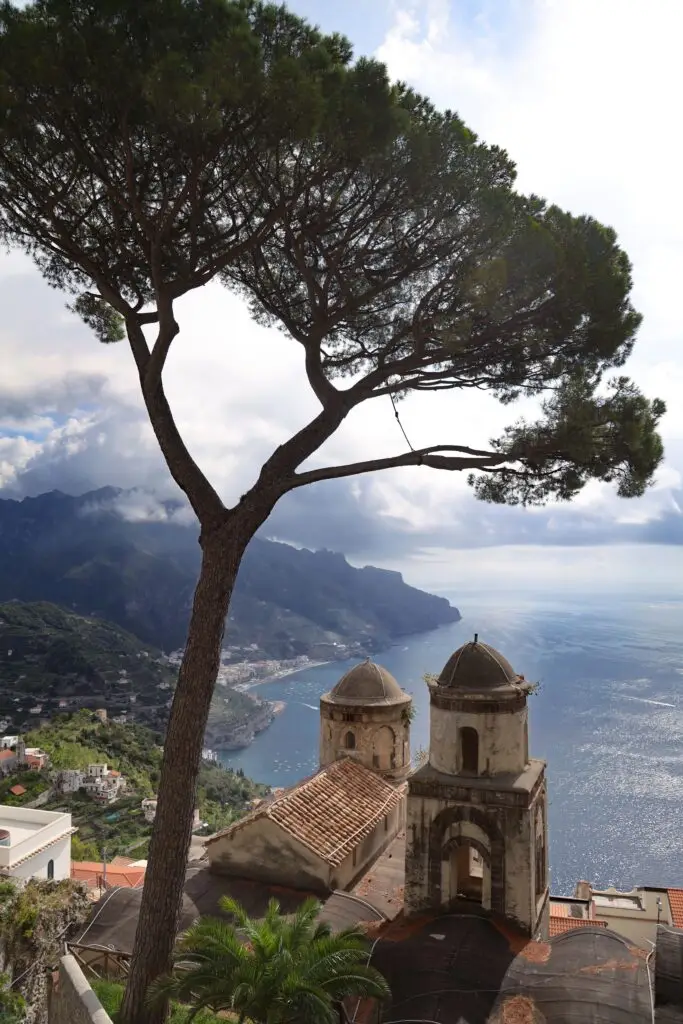
View from Ravello with the Annunziata church towers and the Amalfi Coast

Gardens, culture, calm, celebrations and expansive views

Ravello

An elevated hill town more than 350 metres above the sea, with historic villas, gardens and a notably calmer evening rhythm.

Worth knowing

Ravello is not a seaside base. Every beach, boat or coast-level ferry day requires a road transfer or hotel shuttle, and village routes may still involve stairs.

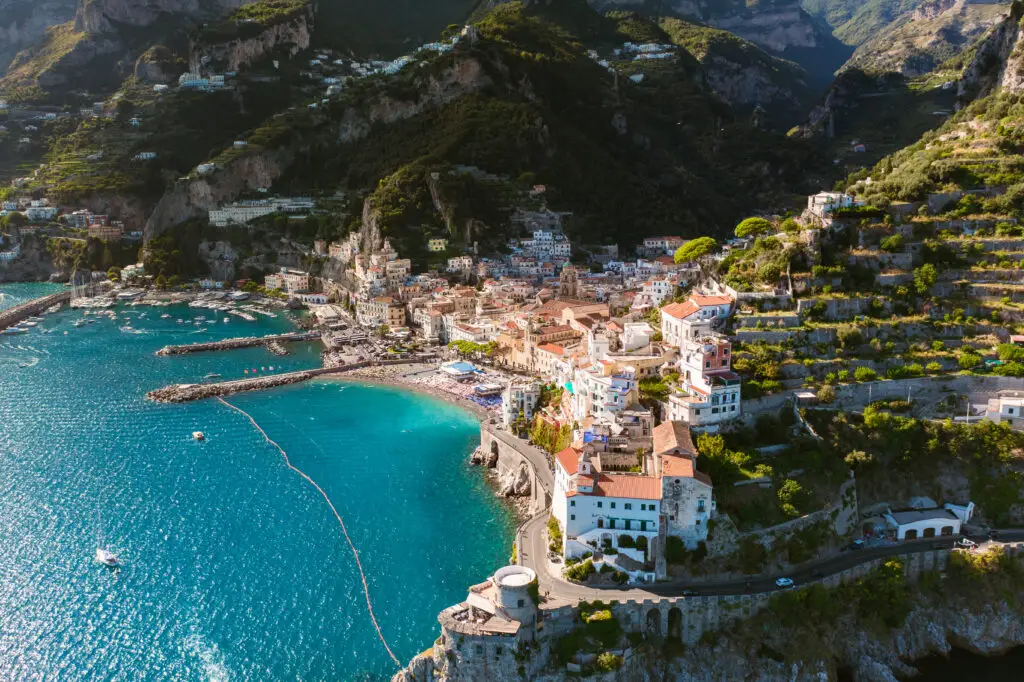
Aerial view of Amalfi town and the coastline in Campania, Italy

History, ferry usefulness, cultural exploration and a compact central base

Amalfi and Atrani

Amalfi combines its cathedral, maritime history, paper-making heritage and seasonal port. Adjacent Atrani offers a smaller residential counterpoint within roughly 700 metres.

Worth knowing

Amalfi draws substantial daytime traffic. Atrani and the upper lanes remain stepped, while the pairing does not offer Positano’s retail and social scene.

A considered introduction

On the southern edge of Italy’s Sorrentine Peninsula, villages rise almost vertically from the Gulf of Salerno: pale houses, tiled domes, citrus terraces and paths cut into the Lattari Mountains. UNESCO recognizes the coast as a cultural landscape shaped by dramatic topography and centuries of human adaptation.

Luxury here is less about moving constantly than choosing precisely. A sea-facing room can transform the stay; the wrong base can add hours of road time and stairs. Build around one or two meaningful experiences, keep a weather-proof alternative, and allow the coast to reveal itself after the day-trippers have gone.

Advisor note

Paramjit Harika’s view: I would choose the base before choosing the hotel. Positano is instantly recognizable but not automatically the best fit; Praiano can feel more private, Ravello more contemplative, and Amalfi more practical. For most clients, one excellent base, a protected arrival plan and a single private day at sea create more pleasure than trying to collect every town.

What stays with you

Signature experiences

On the water

The coast by private boat

Depart early or later in the afternoon, build around one meaningful village stop and preserve time at anchor rather than racing between ports. Vessel, embarkation point, swimming access and route depend on weather, sea conditions and mobility; retain a land-based alternative.

Gardens and culture

Ravello through gardens and architecture

Pair Villa Rufolo with Villa Cimbrone and a specialist guide, leaving room for lunch or an evening performance when the live program fits. Opening hours, ticketing, closures and festival access change; no private access is implied.

History and craft

Amalfi’s maritime and paper-making story

Connect the cathedral quarter and former maritime republic with the Paper Museum, housed in a historic mill with restored machinery. Check the live schedule for demonstrations, religious-site access and dress requirements for the travel date.

Active

Path of the Gods with a qualified hiking guide

Select the route and start point around actual ability rather than treating the trail as compulsory. Official guidance identifies exposed sections, few water sources and areas without protection; proper footwear, water and favorable weather are essential.

Taste and landscape

Lemon terraces and the Path of Lemons

Explore the terraced landscape between Minori and Maiori with a local guide. Add a producer visit or tasting only after confirmation. The route still involves steps, sun and uneven surfaces and should not be presented as universally easy.

Nature and heritage

Valle delle Ferriere

Take a guided walk through streams, woodland and the valley’s paper-making and ironworking history. Route condition, access, heat and water flow vary; confirm the suitable route and any required authorization with a qualified local guide.

Travel restored

What makes Amalfi Coast, Italy a wellness destination?

Amalfi works best as a spa-supported and landscape-led recovery stay, not as a destination medical retreat. The most convincing version combines an appropriate hotel, gentle movement, water and deliberately unscheduled time.

Wellness role
A meaningful restorative layer
Best for
Post-city downshifting, gentle movement, sea-led rest and couples with different daytime interests
Format
Hotel spa and fitness facilities combined with nature, swimming, walking and unstructured time
Ideal commitment
Two or three protected half-days within a five-to-seven-night stay
Intensity
Varies

For companions

A strong mixed-interest fit: one guest can choose spa or pool time while the other explores culture or walks, provided the hotel and access plan work for both.

Seasonal lens

May through June and September into early October generally offer the best balance of movement and downtime. Peak-summer heat changes the appropriate intensity; winter facilities and services may be reduced.

Decompress and restore an unhurried daily rhythm

Sea-led downshift

Combine a quiet hotel morning with weather-dependent boat time or swimming and a long lunch, without adding a second major commitment.

Duration
Half or full day
Intensity
Gentle
Best for
Couples, post-city recovery and guests who relax well around water
Consider

Sea state, motion sensitivity, sun exposure, swimming ability and boarding access require review.

Add restorative movement without creating a fitness program

Terraced movement

Choose a garden walk, the Path of Lemons or a tailored village-and-terrace route based on the guest’s ability and the day’s conditions.

Duration
Two to four hours
Intensity
Moderate
Best for
Active travelers who value landscape and local context
Consider

Stairs and heat are central factors. Keep the Path of the Gods as a separate, more demanding choice.

Reserve genuine recovery time around the hotel

Spa-supported reset

Combine appropriate spa treatments, pool or sea access, light movement and one to three unstructured half-days.

Duration
One to three half-days
Intensity
Gentle
Best for
Travelers wanting wellness without a rigid retreat schedule
Consider

Confirm current facilities, practitioner availability, seasonal opening, accessibility and treatment suitability. This is not an integrated clinical program.

This guide describes leisure wellness, not diagnosis, treatment or medical care. Spa, heat, swimming and hiking may be unsuitable for some guests. Discuss relevant conditions with your clinician, disclose allergies, pregnancy and mobility needs to providers, and confirm practitioner credentials, accessibility and emergency procedures before booking.

Timing the journey

When to go

Late May through June and September.

Jan · Feb · Mar · Nov · Dec

Conditional

Quiet Coast

Weather
Generally milder and quieter than summer, though storms and wet days can reshape plans.
Crowds
Reduced road traffic and visitor volume; the trade-off is fewer dependable tourism services.
Best for
Local atmosphere, reading, food and a slower hotel stay when the chosen property is operating. Never assume hotels, restaurants, beach clubs, boats or ferries will run.

Apr · May

Good

Spring Reopening

Weather
Increasingly pleasant for gardens and walking, with conditions varying around spring weather.
Crowds
Lighter than peak summer but holiday weekends can produce pronounced demand and road pressure.
Best for
Culture, landscapes and active exploration before peak heat. Hotels, ferries and beach facilities phase back on different dates and require live checks.

Jun

Best

Early Summer

Weather
Warm and suited to a mix of sea time, gardens and later-day walking.
Crowds
Lively and increasingly busy, though generally more balanced than the core peak weeks.
Best for
The strongest all-round balance for sea, walking, gardens, dining and evening atmosphere. Exact ferry and hotel services still need live confirmation.

Jul · Aug

Conditional

Peak Summer

Weather
Hottest and most sun-exposed, favoring swimming and carefully timed outdoor activity.
Crowds
Busiest, highest-demand and most traffic-sensitive period; spontaneity is limited.
Best for
Best for guests who actively want beach clubs, boat days and peak-summer energy. Heat, traffic and current road controls must be built into the plan.

Sep

Best

Late Summer

Weather
Strong sea-season appeal, with outdoor activity better timed away from midday heat.
Crowds
Early September remains high-demand and should not be presented as reliably quiet.
Best for
Swimming, boating, dining and later-day walking. The 2026 road controls cover September; future-year rules require reconfirmation.

Oct

Good

Late Shoulder

Weather
Generally calmer with more variable weather and a greater need for flexible outdoor plans.
Crowds
Reduced visitor pressure compared with summer, although dates and events still matter.
Best for
Food, culture, lighter walking and a less scene-driven stay. Ferry, hotel, restaurant and beach-club schedules begin to taper; retain road alternatives.

These windows are planning guidance, not weather guarantees. Ferry, hotel, restaurant, trail, beach-club and event dates change annually, and same-day sea cancellations are possible. Recheck major components approximately 30 days and again 72 hours before travel.

Value, clearly framed

Understanding trip value

The Amalfi Coast is a high-cost, highly seasonal destination. The biggest variables are town, hotel, room and view category, exact dates, transfer strategy and private boat time. A well-chosen base, shoulder-season dates and one signature private day often create better value than frequent road moves or an underwhelming room. Because availability and terms move quickly, VH Luxe prepares date-specific proposals instead of publishing a generic price range.

What shapes the guidance

Planning context: two adults, five nights, a luxury sea-view stay, private arrival and departure transfers, one private boat day and two guided experiences. International air, most meals and travel insurance are separate unless included in the proposal; taxes, service charges, payment and cancellation terms are confirmed in writing.

Journey logistics

Arrive well

Choose the gateway around the final hotel, arrival time, luggage and mobility rather than the closest airport name. Naples usually offers the broadest air choice; Salerno can create a useful rail-and-sea handoff when the live timetable works. Ferries are seasonal supplements, not the only protection for a same-day international flight.

Primary gateway Naples International Airport (NAP)

Final transfer

Naples Airport to the Amalfi Coast by private road transfer

Naples International Airport (NAP)Positano, Praiano, Ravello, Amalfi or Atrani

Pre-arranged chauffeur transfer · 1h 45min–3h 30min

Planning allowance only, not a promised operator time. Traffic can materially extend the journey, particularly in peak periods. Current SS163 controls and the exact hotel drop-off must be rechecked; use a professional transfer.

Rail

Naples Centrale to Salerno, then seasonal ferry

Naples CentraleSalerno port, then Amalfi or Positano

High-speed rail and scheduled seasonal ferry · 2h–3h 30min

Allowance includes station-to-pier transfer and waiting. Ferries are seasonal, weather-sensitive and subject to change; Praiano and Atrani have fewer services, while Ravello requires an uphill road transfer. Keep a road alternative.

Premium commercial air

Salerno Costa d’Amalfi Airport plus road transfer

Salerno Costa d’Amalfi Airport (QSR)Amalfi Coast hotel

Commercial flight and pre-arranged chauffeur transfer · 1h 15min–2h 45min

Planning allowance only. QSR has a more limited route network than Naples, and its access infrastructure continues to evolve. Check the live flight schedule and hotel-specific road time before choosing it as the preferred gateway.

Private aviation

Private aviation subject to operator and handler confirmation

Client-specific departure airportNaples or, when operationally appropriate, Salerno

Private aviation with handler-confirmed road transfer

Flight and total journey times are confirmed only after the operator and local handler confirm aircraft suitability, permissions, PPR or slots, handling, operating constraints and the final road plan. Naples publishes PPR and slot requirements for general aviation.

Access and mobility

The coast is inherently vertical. Steps, sloped lanes, uneven paths, small piers and tender-style boarding are common. Select the hotel, room, vehicle drop-off and boat embarkation together; confirm in writing the lift coverage, residual steps, shower access and step-free routes. The Path of the Gods is unsuitable for many mobility profiles.

Before you go

Practical planning notes

Packing

Terrain and footwear

Pack supportive footwear. Short map distances can conceal substantial gradients, staircases and uneven paving.

Getting around

Ferries and sea conditions

Treat ferries as seasonal, weather-dependent transport. Keep a road alternative for important connections and never protect a flight with a ferry-only plan.

Getting around

Rental cars

A rental car is not the default recommendation. Parking is scarce, the SS163 is demanding, and annual traffic restrictions change. Favor pre-arranged transfers, selected ferries and hotel shuttles.

Reservations

Reservations

In high season, reserve hotels, boats, specialist guides and priority dining early while preserving at least one weather-flexible day.

Packing

Luggage

Compact luggage makes station, pier and stair transfers easier. Confirm the exact vehicle-to-room route and whether porter support is available.

Wellness

Heat and trails

Start walks early, carry water and sun protection, and select routes around actual fitness and exposure tolerance rather than reputation alone.

Mobility

Mobility and motion

Confirm elevators, residual stairs, shower access, pier surfaces, vessel boarding and motion sensitivity before finalizing the hotel or boat plan.

Etiquette

Local respect

These are living residential villages. Dress appropriately for sacred sites, moderate noise and use qualified local guides and properly authorized suppliers.

The VH Luxe approach

How VH Luxe composes the journey

  1. Define the right rhythm

    Translate the travel style, pace, privacy, mobility and celebration brief into the right Amalfi Coast base before selecting a hotel.

  2. Shape the air and arrival strategy

    Compare suitable premium-cabin routings and fare conditions, then coordinate ticketing and arrival timing with the hotel, luggage, mobility and transfer plan.

  3. Place the hotel and room precisely

    Match the property, room category, view, outdoor space, steps and vehicle access to the brief, and confirm any eligible advisor benefits in writing at booking.

  4. Compose the coast

    Coordinate one signature private experience, a cultural or active layer and protected unscheduled time without turning the coast into a checklist.

  5. Reconfirm and coordinate

    Recheck seasonal openings, ferries, traffic controls, boat conditions and accessibility, and remain the coordinating point when one itinerary change affects another.

Paramjit Harika, VTA, CTA

Advisor-led planning

Your journey, personally considered

Paramjit Harika

Founder & Luxury Travel Advisor

I coordinate your hotel and room, premium air, transfers and key experiences as one considered journey, with one point of contact from planning through travel.

Good to know

Frequently asked questions

Which Amalfi Coast town is best?

There is no universally best base. Positano offers energy and recognition, Praiano discretion, Ravello gardens and calm, and Amalfi with Atrani history and useful seasonal connections. The right answer depends on how you want each day to feel.

How many nights should we stay?

Five to seven nights gives the coast room to breathe and absorbs weather or traffic changes. Four nights can work inside a larger Italy journey when the base, transfers and priorities are tightly edited.

What is the best time to visit?

Late May through June and September usually offer the strongest overall balance. July and August suit guests prioritizing swimming and peak-summer energy over quiet. Winter can be atmospheric but requires careful hotel and service verification.

Should we rent a car?

Usually not as the default luxury strategy. Parking, the SS163, congestion and changing traffic restrictions add friction. Private transfers, selected ferries and hotel shuttles are generally easier to compose.

Should we fly into Naples or Salerno?

Naples normally provides the broadest air choice. Salerno can create an elegant rail-and-ferry handoff or a shorter road approach when a live QSR flight works, but it should be chosen from the exact schedule rather than assumed.

Should we split the stay between two towns?

Usually not for a shorter trip. Moving luggage and negotiating the road can consume the time the split is intended to improve. Consider two bases for approximately seven nights or more, or when there is a clear reason such as combining seaside resort time with Ravello.

Can the Amalfi Coast work for limited mobility?

Sometimes, but only through detailed curation. Select the town, hotel, room, drop-off, elevator route and boat access together, and obtain written confirmation of every residual stair or slope. Maps and generic accessible labels are insufficient.

Is the Amalfi Coast a wellness retreat destination?

It is better framed as a destination with excellent spa-supported and landscape-led wellness. A few hotels offer active programs or fixed-date retreats, but the coast as a whole is not an integrated clinical or practitioner-led wellness destination.