The VH Luxe destination guide

The Peruvian Amazon

Last updated 13 August 2026

Choose lodge or vessel by habitat, transfer resilience and naturalist quality, never by a wildlife promise.

Recommended stay

4–

6 nights

Best time

Tambopata and Loreto follow different rain, river and access patterns. Pacaya-Samiria identifies May through September as a recommended period and October through April as wetter, but higher water can open channels while lower water can expose trails or beaches. Choose the habitat and activity first, then recheck current hydrology and weather.

Primary gateway

Puerto Maldonado (PEM) for Tambopata; Iquitos (IQT) for Iquitos and Nauta routes

Journey context

Allow 4 to 6 forest or river nights, plus gateway nights as needed. Longer routes require stronger communications and evacuation planning.

Curator’s verdict

The Peruvian Amazon is not one product. Tambopata offers a fixed forest base reached through Puerto Maldonado, while Iquitos and Nauta open river-led journeys into a vast floodplain system. Luxury lies in choosing the right habitat, transfer chain, guide ratio, cabin or room, communications and recovery plan before choosing the most remote map point.

Choose well

Should the traveler choose a Tambopata lodge or an Iquitos-area river journey, and what level of remoteness is appropriate?

Choose the ecosystem and daily movement pattern first, then set the acceptable remoteness from the weakest point in the traveler's health, mobility or communications plan.

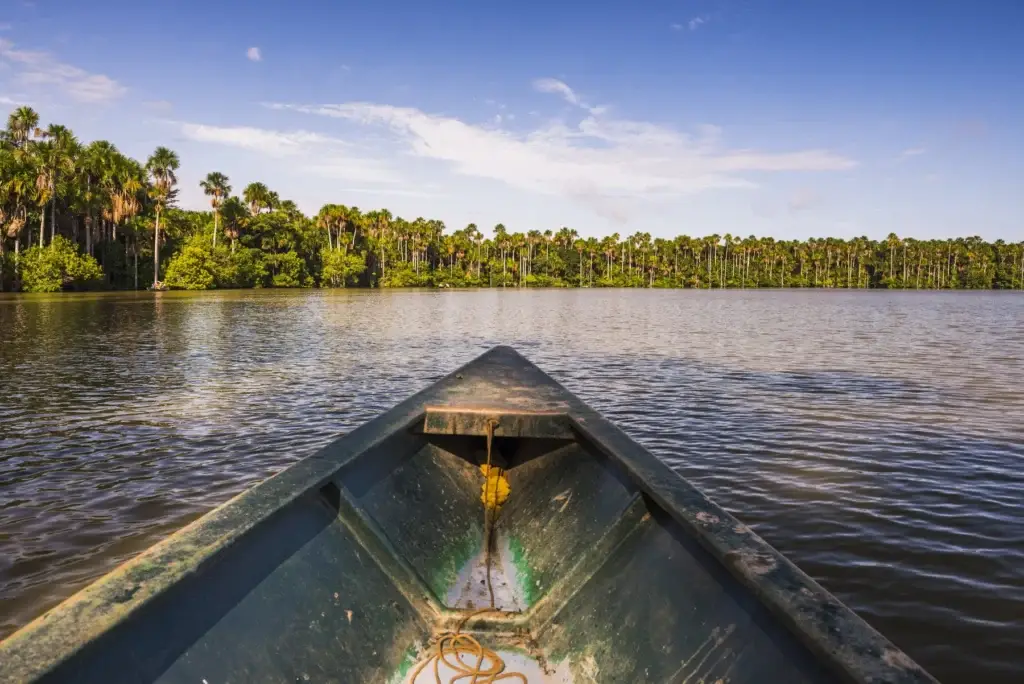
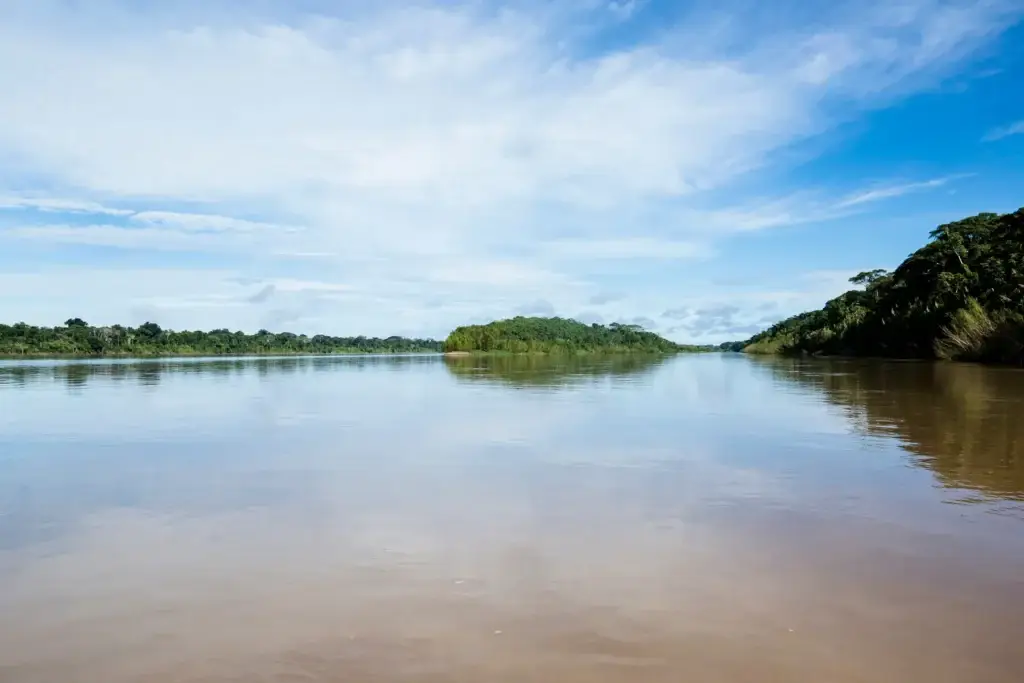
Image Of River In Peruvian Jungle. Amazon Forest During Day With Clouds. Open Nature Traveling In

Travelers who want naturalist-led trails, canopy structure and one room to return to

Choose a fixed Tambopata forest base

A lodge can support repeated dawn and dusk outings with a familiar guide, while sector choice determines boat time, walking and remoteness.

Worth knowing

A fixed base does not remove heat, insects, mud, stairs or long transfers, and deeper forest does not guarantee rarer wildlife.
Documented Amazon, Marañón, Ucayali or Pacaya-Samiria river journey in Loreto

Travelers drawn to broad rivers, flooded forest and changing daily geography

Choose an Iquitos-area river journey

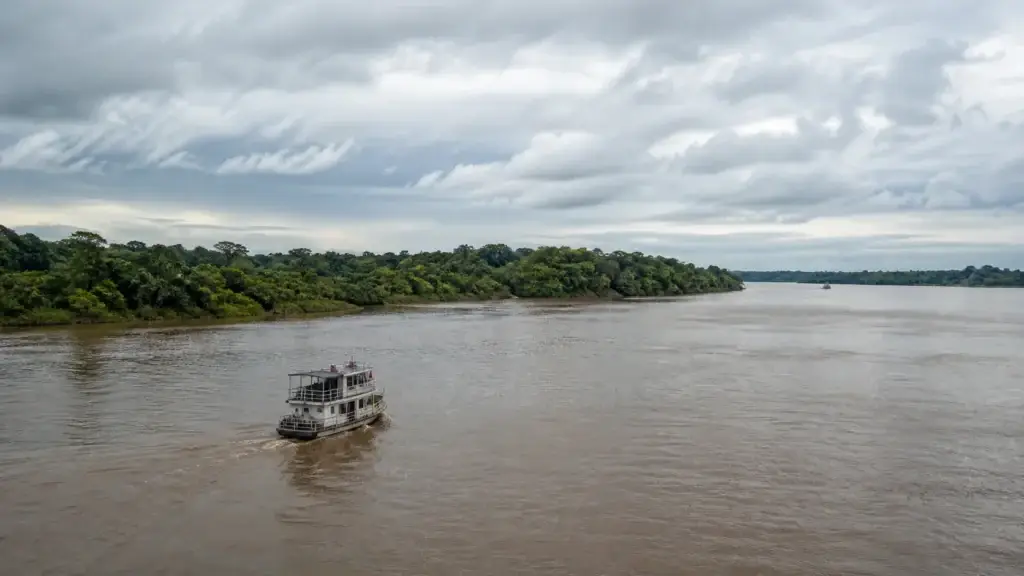
A vessel or authorized river lodge can follow water conditions and use skiffs for smaller channels, with cabin, engine, dock and emergency details reviewed first.

Worth knowing

Vessel comfort does not remove skiff boarding, river current, engine noise, motion or restricted shore access.

Travelers who value interpretation, ethical distance and sensory detail

Choose the naturalist before the species list

Ask about guide credentials, language, group size, spotting ethics, daily continuity and how plans change when wildlife is absent.

Worth knowing

A long species checklist may describe regional possibility, not the probability of the booked route.

Travelers balancing immersion with medical, mobility or communications needs

Let emergency resilience cap remoteness

Match the route to radio or satellite systems, trained crew, medical kit, evacuation path, daylight transfer and realistic return time.

Worth knowing

Remoteness can deepen silence while also increasing the consequence of weather, injury, illness or mechanical delay.

A considered introduction

Use a Tambopata lodge when forest trails, canopy structure and a stable base are central. Use an Iquitos-area vessel or established lodge route when river movement, blackwater channels and flooded forest are the reason to travel. Each choice has different wet landings, stairs, noise, heat, insect exposure and evacuation logic.

Allow four to six nights in the forest or on the river, excluding necessary gateway nights. Choose an authorized operator, ask who the naturalist is, and treat every wildlife encounter as conditional. River level, rain, heat, smoke and reserve rules can change the actual program.

Advisor note

Advisor perspective: I would choose the operating model before the most photogenic species. A private naturalist, small boat and thoughtful cabin or lodge room can improve attention and pacing, but cannot create sightings or bypass SERNANP rules. VH Luxe Travels can coordinate tailored arrangements where applicable, with authorization, transfers and emergency resilience confirmed for the exact route.

What stays with you

Signature experiences

Exact Peruvian forest or river dawn with naturalist-scale observation

Naturalist attention

Begin with a dawn sound map

Arrange a confirmed one-to-one or very small-group outing to distinguish canopy, understory, water and insect layers before naming species, with distance and silence led by the naturalist.

Exact Sandoval or another authorized Tambopata oxbow-lake route

Tambopata forest

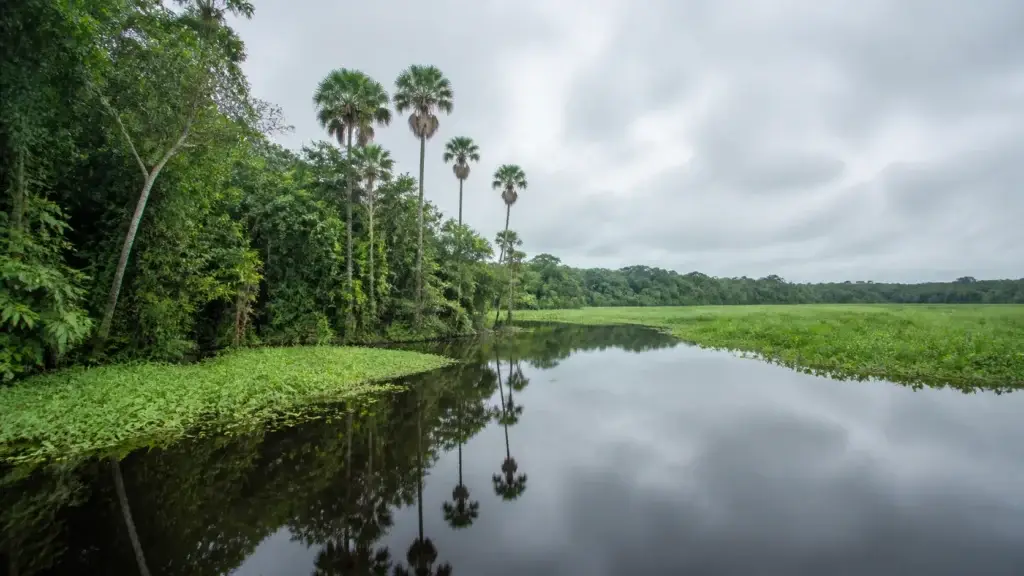
Read one oxbow lake and terra firme edge

Choose an authorized Tambopata route that combines water and forest structure, accepting that rain, mud, river level and wildlife can change the exact outing.

Exact Yanayacu-Pucate or documented Pacaya-Samiria flooded channel

Flooded forest

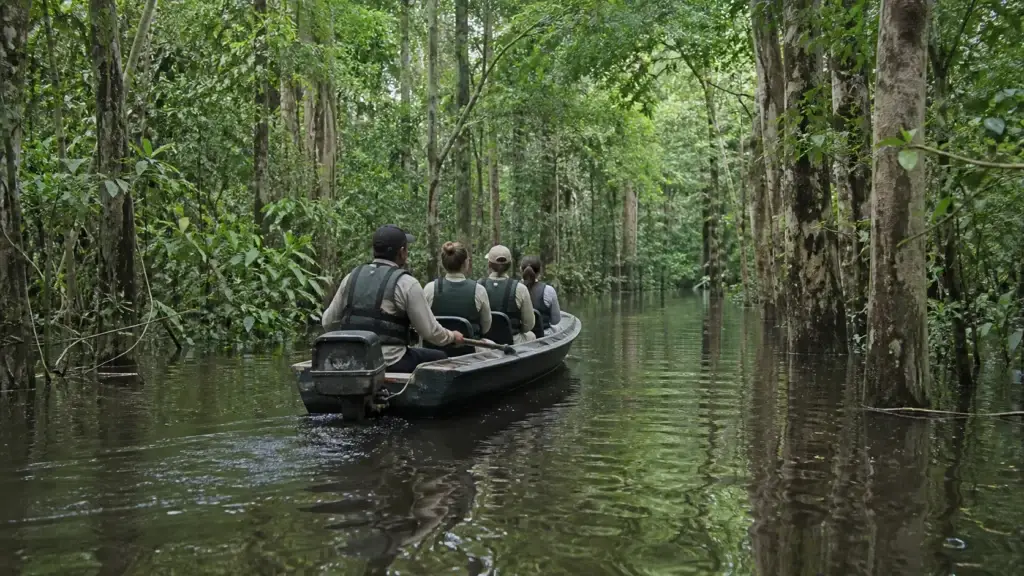
Move quietly through one Pacaya-Samiria channel

Use an authorized operator or local tourism group, life jacket and low-speed boat to understand flooded-forest hydrology without chasing dolphins, primates or caimans.

Documented current Pacaya-Samiria community management activity offered to visitors

Conservation practice

Learn from one currently authorized management project

When the responsible group offers it, study a sustainable fisheries, fruit or taricaya-management program in its own terms, with consent and compensation confirmed.

Exact Peruvian Amazon lodge platform or authorized boat at night

River and forest night

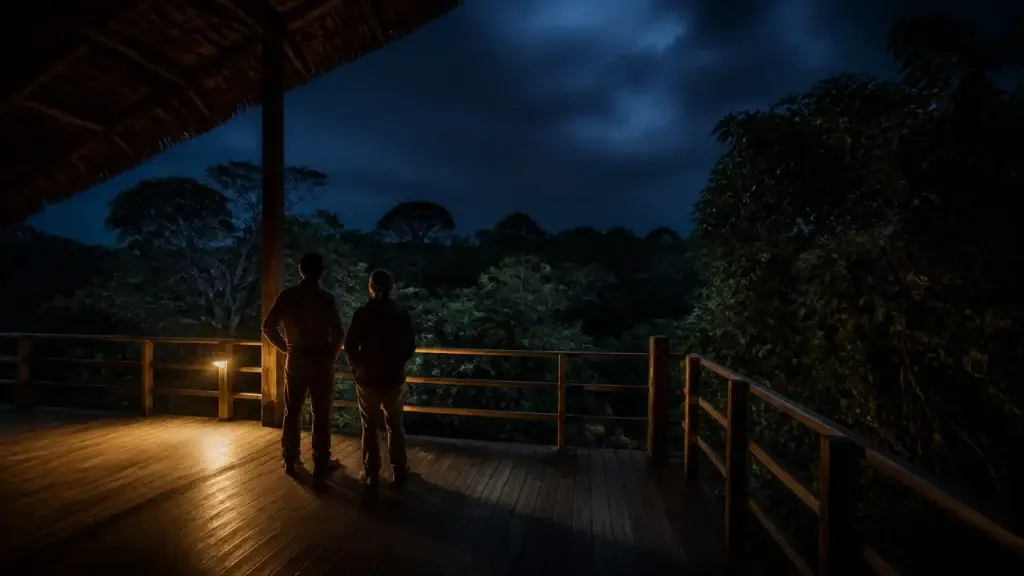
Let darkness narrow the sensory field

Use a safe lodge platform or authorized boat interval to listen with the naturalist, keeping lights, playback and movement within the operator's wildlife rules.

Travel restored

What makes The Peruvian Amazon a wellness destination?

What makes the Peruvian Amazon a wellness destination?

The forest and river retrain attention: follow daylight, distinguish sound layers with a naturalist and let heat or rain reduce the agenda. Research suggests possible short-term stress effects from nature exposure, but this is not detox, medicine or treatment; the lasting shift is learning to notice before naming.

Wellness role
A primary reason to travel
Best for
Travelers seeking lower digital stimulation, expert-led attention, ecological meaning and a more responsive daily rhythm
Format
River-light rhythm, naturalist-led sensory attention, flood-pulse literacy and protected digital quiet
Ideal commitment
One dawn listening interval, one quiet channel or lake outing, midday recovery, protected sleep and no forced wildlife chase
Intensity
Varies

For companions

Strong for couples and private small parties when heat, insects, boats, steps, trails, communications and medical needs are matched individually.

Seasonal lens

Year-round when gateway, habitat and river state are matched; rain and water level change the daily form.

Let daylight and heat shape activity

River-light rhythm

Protect dawn and dusk for naturalist work, then keep the hottest interval quiet rather than filling every hour.

Duration
Every forest or vessel day
Intensity
Gentle
Best for
Travelers recovering from schedule density
Consider

Early outings still require sleep, insect protection, safe transfers and weather judgment.

Train attention before identification

Naturalist sound mapping

Separate water, canopy, understory and insect sounds with one expert instead of chasing a species checklist.

Duration
One dawn and one dusk interval
Intensity
Gentle
Best for
Travelers seeking sensory focus and lower stimulation
Consider

Playback, lights and approach distance must follow wildlife rules; no sighting is promised.

Understand change as the system rather than a disruption

Flood-pulse literacy

Let an authorized naturalist explain how river level reshapes channels, forest access and daily life without calling one water state superior.

Duration
One slow river interval
Intensity
Gentle
Best for
Travelers drawn to systems thinking and ecological context
Consider

Hydrology is dynamic; access and interpretation require live local evidence.

Reduce inputs without romanticizing disconnection

Protected digital quiet

Set a deliberate device window while preserving the operator's communications and emergency systems.

Duration
One daily offline interval
Intensity
Gentle
Best for
Travelers who want fewer notifications and more direct observation
Consider

Digital quiet never justifies disabling safety communications or hiding limited connectivity.

Wellness descriptions do not promise detoxification, healing, immunity, improved sleep, biomarker change or longevity. Plant medicine, ayahuasca and kambo are excluded. Travelers need destination-specific clinician advice.

Timing the journey

When to go

Tambopata and Loreto follow different rain, river and access patterns. Pacaya-Samiria identifies May through September as a recommended period and October through April as wetter, but higher water can open channels while lower water can expose trails or beaches. Choose the habitat and activity first, then recheck current hydrology and weather.

May · Jun · Jul · Aug · Sep

Best

Lower-rain planning window

Weather
Pacaya-Samiria identifies this as a recommended period, with heat, humidity and rain still possible.
Crowds
Popular vessels, guides and holiday dates can tighten early.
Best for
Trail and river combinations with live sector checks.

Oct · Nov · Dec · Jan · Feb · Mar · Apr

Conditional

Wetter and higher-water period

Weather
Rain and rising water can open some channels while narrowing trails, landings or visibility.
Crowds
Holiday demand can coincide with weather disruption.
Best for
River-led travel with strong rain and transfer tolerance.

Jul · Aug · Sep

Conditional

Low-water wildlife sensitivity

Weather
Lower water and hotter intervals can reshape beaches, channels, trail access and animal behavior.
Crowds
Access concentration can increase pressure on a limited route.
Best for
Specific low-water habitats with strict nesting and distance rules.

Flights, roads, river levels, currents, docks, boats, reserve sectors, operator authorization, rain, heat, insects, smoke, wildlife, community programs, communications and emergency access change. Confirm the exact route immediately before travel.

Value, clearly framed

Understanding trip value

Custom quote based on gateway, sector, lodge or vessel, cabin, transfer chain, naturalist ratio, reserve tickets, communications, medical and evacuation planning, and cancellation terms. No public package price is stated.

What shapes the guidance

4 to 6 forest or river nights for two travelers; PEM or IQT gateway, authorized reserve operator, road and boat transfers, naturalist guiding, health preparation and gateway buffer priced at proposal stage.

Journey logistics

Arrive well

Use PEM for an authorized Tambopata lodge chain that may combine road, river and walking. Use IQT for Iquitos-area vessel or lodge routes, with Nauta often adding a road and river connection. Avoid same-day tight flight and boat assumptions, and confirm daylight, life jackets, communications and weather.

Primary gateway Puerto Maldonado (PEM) for Tambopata; Iquitos (IQT) for Iquitos and Nauta routes

Premium commercial air

Enter Tambopata through Puerto Maldonado

Confirmed Peruvian air gatewayPadre Aldamiz International Airport (PEM)

Scheduled air followed by an authorized lodge's road, river and walking transfer

Sector remoteness varies substantially. Confirm authorization, boat, landing, walk, luggage, daylight and evacuation plan.

Premium commercial air

Enter the northern Amazon through Iquitos

Confirmed Peruvian air gatewayIquitos International Airport (IQT)

Scheduled air followed by a confirmed city, dock and vessel or lodge transfer

Confirm the airport-to-dock transfer, embarkation, luggage, river conditions and missed-flight plan.

Final transfer

Continue from Iquitos toward Nauta and Pacaya-Samiria

IquitosNauta and the authorized reserve sector

Prearranged road transfer, then authorized river transport

The exact sector changes river time and remoteness. Confirm life jackets, licensed crew, fuel, weather, checkpoints and communications.

Access and mobility

Confirm aircraft assistance, road vehicle, dock stability, gangway, boat transfer, wet landing, life-jacket fit, cabin or room stairs, trail surface, mud, roots, heat, toilets, guide support, communications and evacuation individually. A larger vessel may reduce some transfer demands but does not establish step-free access to skiffs, docks or forest paths.

Before you go

Practical planning notes

Reservations

Confirm SERNANP authorization

Match the current operator to the exact protected area and sector, not only a property claim.

Wellness

Complete travel-health review early

Amazonian Peru requires clinician-led review of vaccines, malaria prevention and personal medical risks.

Wellness

Use a life jacket

Confirm correct fit and wear it for river transfers and reserve navigation as instructed.

Etiquette

Keep sightings conditional

Never bait, feed, call, chase or crowd wildlife, and do not build satisfaction around one species.

The VH Luxe approach

How VH Luxe composes the journey

  1. Choose the gateway and operating model

    Select PEM and lodge or IQT and river journey before comparing individual properties.

  2. Set the remoteness ceiling

    Use mobility, health, communications and evacuation evidence to choose the sector.

  3. Protect dawn and dusk

    Keep midday flexible for rest rather than forcing continuous heat exposure.

  4. Leave the final transfer resilient

    Avoid a fragile boat-to-flight connection and retain a gateway buffer when needed.

Paramjit Harika, VTA, CTA

Advisor-led planning

Your journey, personally considered

Paramjit Harika

Founder & Luxury Travel Advisor

I coordinate your hotel and room, premium air, transfers and key experiences as one considered journey, with one point of contact from planning through travel.

Good to know

Frequently asked questions

Is Tambopata or Iquitos better for a first Peruvian Amazon trip?

Choose Tambopata for a fixed lodge and forest-trail rhythm. Choose Iquitos or Nauta for a river-led journey and flooded-forest systems. Neither guarantees better wildlife.

Is an Amazon cruise easier than a lodge?

A vessel may provide a stable cabin, but skiff boarding, docks, stairs, motion and engine noise remain. A lodge may reduce daily packing but add trails, mud and longer fixed transfers.

How many nights do you need in the Peruvian Amazon?

Allow 4 to 6 forest or river nights, plus any gateway buffer needed for safe flight and boat connections.

Are jaguars, macaws or pink dolphins guaranteed?

No. Every sighting depends on habitat, season, weather, animal behavior and luck. Ethical guiding does not bait, chase or crowd wildlife.

Do you need an authorized operator?

Yes for the protected areas in this guide. Confirm the operator against SERNANP for the exact reserve and sector before booking.

Does this guide recommend ayahuasca or plant medicine?

No. Ayahuasca, kambo, plant-medicine, detox and healing tourism are outside the guide's wellness framework.